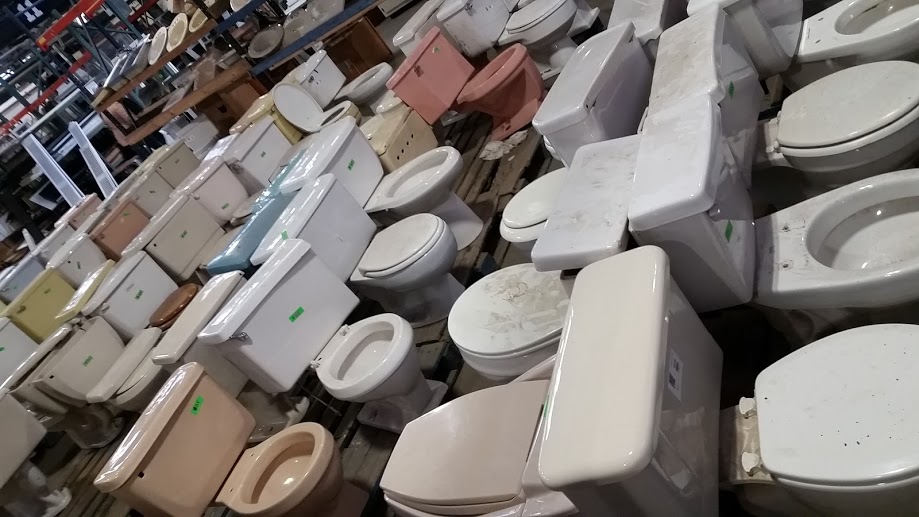
An example of Construction Junctions’ more popular item-a toilet. And lots of them. Photo by Johanna Setenbach.
Spend Less, Save More
A city thrives on community. Unlike rural areas, the unique quality of a city is in its ability to condense a large population into a smaller area of land. Within this cultural mesh, community inevitably forms. It’s what this community brings to the city itself that matters. Pittsburgh is a city that utilizes community in many aspects, one being through the act of reusing and recycling. Between Construction Junction and Pittsburgh’s Center for Creative Reuse, it’s evident that Pittsburgh is a community that truly cares about its city, and is brought together by positive change and transformation.
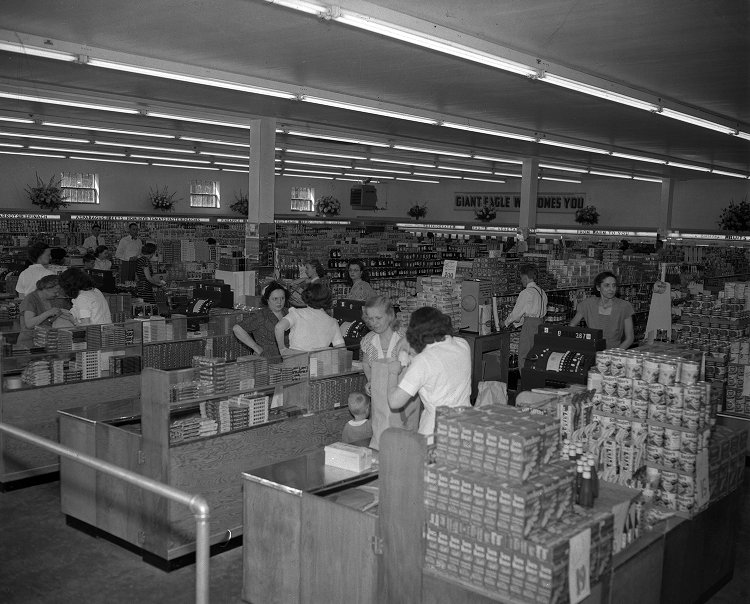
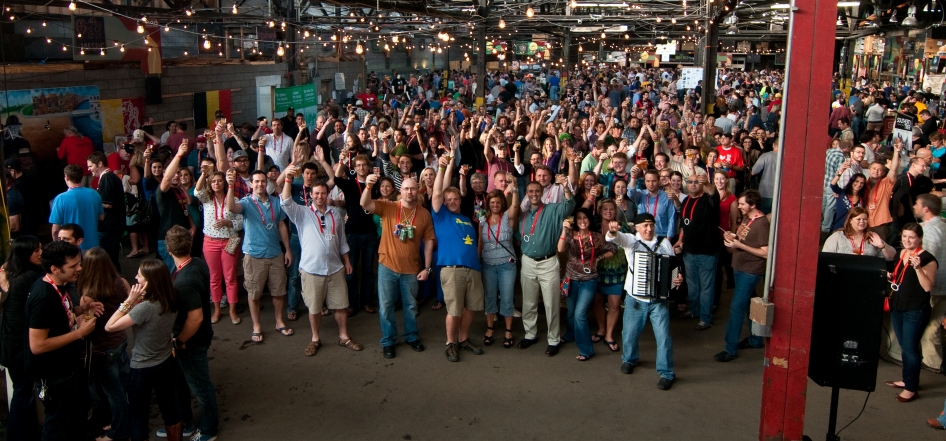
To pinpoint the positive effects of Pittsburgh’s community, I will highlight the Steel City Big Pour event that happens annually at the Construction Junction warehouse. To summarize, the Steel City Big Pour event is a day filled with live music, art, beer, and food from the finest area restaurants. All proceeds made from the ticket sales go to sustaining Construction Junction and their mission to promote conservation through the reuse of building materials. The major sponsors include Giant Eagle, the Pittsburgh Post-Gazette, Mad Mex, and Goodwill. As exemplified by the picture below taken from the Historic Pittsburgh Archives, Giant Eagle has been a staple in the Pittsburgh community for over half a century. The event itself is a great way for the community to come together, taste local craft beers, and collectively help the community by promoting Construction Junction’s purpose of reusing old material. In addition to supporting Construction Junction’s recycling efforts, this event helps the community in numerous other ways as well. It helps to inform future customers and suppliers about Construction Junction in any of their personal future endeavors, it promotes local beer distributors that might just be getting started in the industry, and it highlights different food establishments in the Pittsburgh area. Overall, it’s an event built by the community, for the community.
Within the City of Pittsburgh, especially on a college campus, we strive to be as resourceful with our supplies as possible. Students are in association with organizations ranging from Clutter for a Cause to the University of Thriftsburgh, all working for a common goal: to waste less. Clutter for a Cause is a sustainability effort where students are able to donate their items to be reused or repurposed. It’s an annual donation drive that begins in the spring, right as students are leaving for the summer. The donation and repurposing aspects are similar to that of Pittsburgh’s Center for Creative Reuse and Construction Junction, in that these pieces will be utilized in ways other than contributing to landfill. The administration puts up these large blue bins in residence halls, student centers, and the union, to remind people of a sustainable alternative to throwing out old items. All usable goods are distributed to organizations in need, which again supports the claim that Pittsburgh is a community-oriented city that strives to help, contribute, and positively impact its population.
The University of Thriftsburgh is a fairly new initiative taken on at the University of Pittsburgh. It began in the Spring Semester of 2014 in a class titled, “Sustainability”. Two students from the class, Anna Greenberg and Paul Heffernan, worked with the Office of Pittserves to open the thrift store. Its official opening date was on March 18th, 2015. Since its establishment, the University of Thriftsburgh has been profitable. The best part is that the entire initiative is student-run. It’s evident that students on campus follow in the footsteps of the Pittsburgh community, where recycling is much more than putting a glass bottle in a separate bin.
It’s important to note that these innovative recycling initiatives don’t stop at the initial transaction. They create green-collar jobs, reduce waste, and educate people about “how to live a simpler, more creative lifestyle…One person’s trash is another person’s treasure, enriching all of us” (Chilcote). The green movement is about awareness and education and once that is established, it moves to a collective action. For example, once those students in the “Sustainability” class were educated and aware of the overwhelming amounts of waste produced by college students every year, they were determined to find a solution, and, thus, that’s how the University of Thriftsburgh was born.
The administrative group at the Pittsburgh Center for Creative Reuse devotes time to teaching children and adults the art of creative reuse at locations ranging from libraries, festivals, and senior centers. Additionally, their classes teach conservation skills through hands-on workshops for kids. The Pittsburgh Center for Creative Reuse hosts Reuse-a-Paloozas, block parties, bar crafts, scrapbooking classes, and workshops with artists-in-residence. Reuse-a-Palooza is an open-ended program that provides firsthand exploratory creative activities for participants of all ages, usually centered around a theme. Again, it all relates back to community benefits incorporated in all steps of the creative process. A direct example of the Pittsburgh Center for Creative Reuse’s impact is that it eliminates two tons per month from landfill. Less landfill is correlated with a cleaner, more sustainable city.
With more creative reuse centers popping up all over the country, it’s important to know how one thrives and maintains enough profit to stay open. The article, “How To: Start a Creative Reuse Revolution in Your Community in 5 Steps” by Kyla Fullenwider, outlines the fundamentals behind these initiatives. The five steps include: 1. Create a business name and plan, 2. File for non-profit status ASAP, 3. Find a central location, 4. Curate your collection, and 5. Build your community. While all of them are essential to opening and maintaining a creative reuse organization, the last step is the most important. Because creative reuse centers have unique business setups, in that the consumers are also often the suppliers, community is really the backbone of the entire operation. Without the immense support that comes with the Steel City Big Pour event, Construction Junction wouldn’t be financially stable. It’s truly a community effort that goes into the culture of creative reuse.
All this recycling and reusing business sounds practical, but what is the result? The website, junk-culture.com, displays artists work when using repurposed material. It’s fascinating to see how one item can be transformed into another seamlessly. “Junkculture embodies the belief that the waste products of our consumer culture can be transformed into art that incorporates the history of their human use” (junk-culture.com).
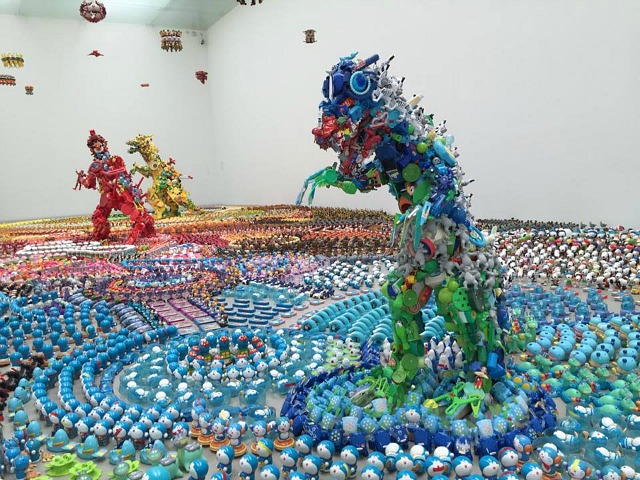
The picture above is an example of an artist’s work using repurposed material. This exhibit was created by Japanese artist, Hiroshi Fuji. It is a large-scale installation made of discarded toys. “The brilliant installation explores the creative potential of trash finding ‘ways of transforming existences (thoughts) that are not valued by society into special existences’” (junk-culture.com). Working within the confines of repurposed material may seem restricting, but in fact it brings a heightened creativity to the piece that wouldn’t be effective if the material was brand new.
This creative reuse culture isn’t just a fad, it’s practical and useful for artists and teachers on a budget. It will be interesting to see what other fields reused materials can correlate with in the future, such as event planning, religious events, or even movie props. Over time, we’ll see this culture expand beyond the confines of a city and hopefully become a worldwide trend to waste less, spend less, and save more. No matter where this trend is going, however, it’s crucial that it has a supportive community willing to change their habits by purchasing and donating to these centers in order to keep them in business.