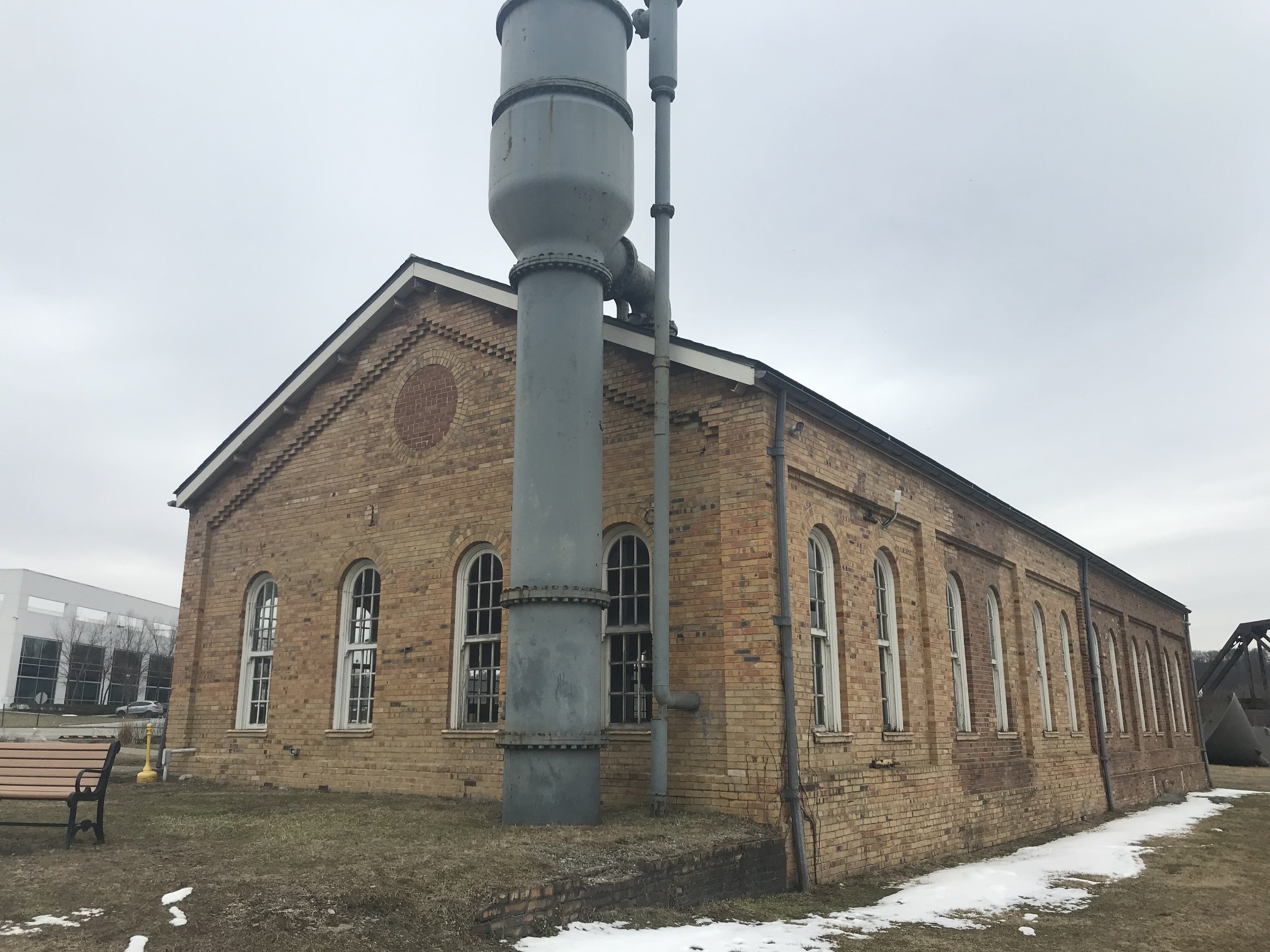
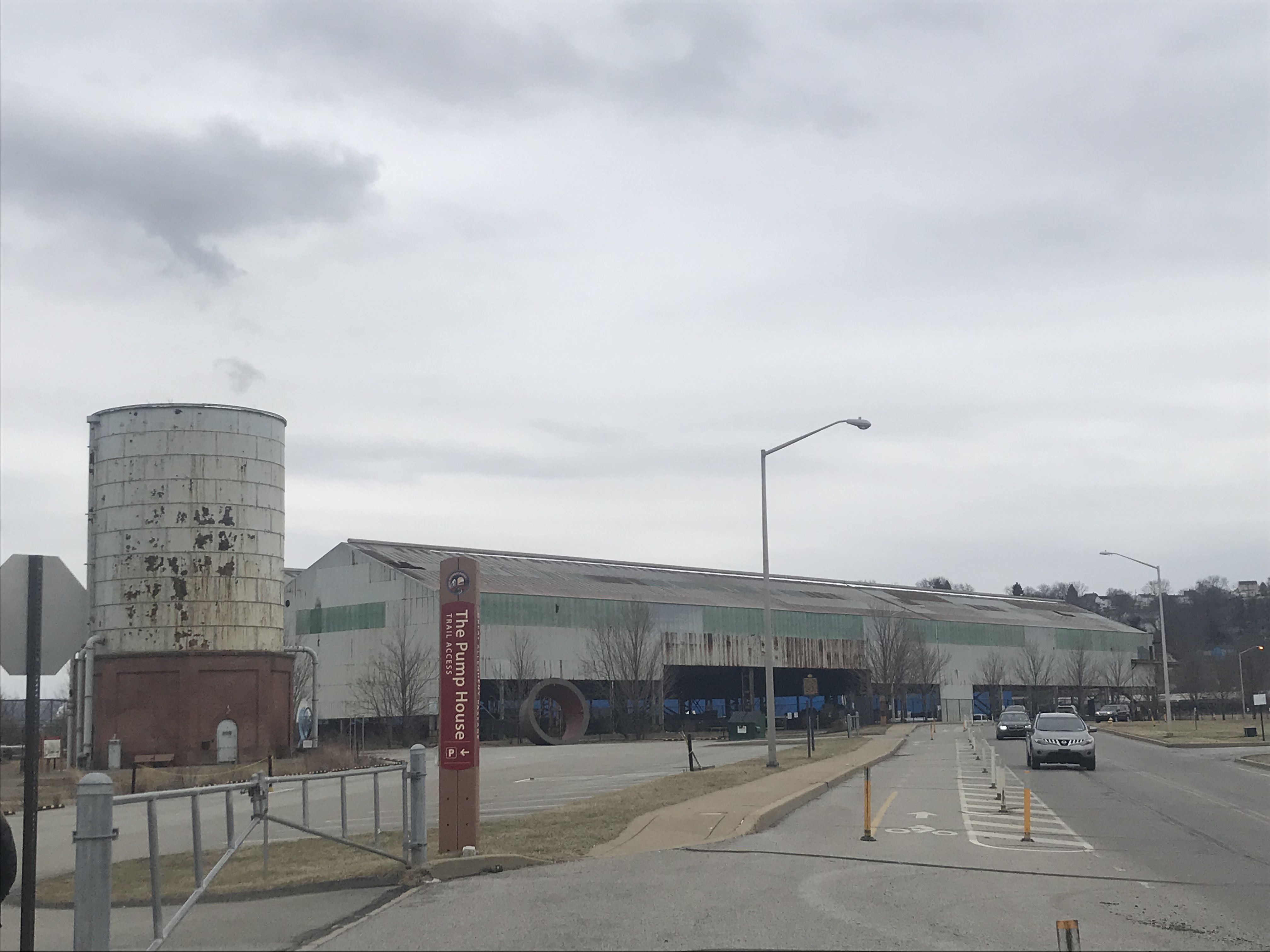
A view of the historic Pump House. Photo by Evan Bolette
End of Union, End of All
Growing up, I always remembered my grandfather talking about his times in the mills and the importance of the union, especially local union #8377, where he was president. I lived in Pittsburgh, Pa, steel capital of the world for late 1800’s and most of the 1900’s, and the metals mills were deeply rooted in everybody who was a resident there. The entirety of Pittsburgh was based off its metal production, most notably steel, along with lesser known productions of iron, copper, and aluminum. Pittsburgh steel has been shipped out and used in numerous popular landmarks, such as the Empire State Building and the Golden Gate Bridge. Unfortunately, mass industry comes with major health hazards. My grandfather went on to tell how if it wasn’t for unions in these mills, all their workers wouldn’t live to retire. Not only were there health hazards, but as soon as the next contract came along, thousands of workers would be replaced and kicked to the curb, with nothing to help pick themselves back up. In the words of Thomas Bell in Out of This Furnace, “If the union lets Frick have his way it will be the finish for everyone” (Bell 40).
A study from Princeton university in 2013 found that “those who were born in steel towns have significantly higher mortality rates than those born in non-steel towns” (Taylor 4). In the case of Pittsburgh, it was also found that “mortality rates are higher for those born in low elevation steel towns, i.e., towns that were likely in valleys” (Taylor 4). Fortunately, unions worked to fix said health crisis and pushed for more secure jobs.
In 1892, the skilled workers of a steel mill out in homestead, Pa were members of the Amalgamated Association of Iron and Steel workers (alfcio.org). They bargained for good wages and work rules, allowing for safer practices in the field. However, management owner, Andrew Carnegie looked to lower production costs by breaking the union. Henry Frick went on to talking to Carnegie, exclaiming, “the mills have never been able to turn out the product they should, owing to being held back by the Amalgamated Men” (alfcio.org). Management began to act by demanding wage cuts for 325 employees in 1892, as the unions three-year contract was ending (alfcio.org). Management decided not to negotiate, even though workers had already taken a wage cut three years prior, issuing ultimatums to the union workers (alfcio.org). Frick and Carnegie then went on to build a 10-foot-high fence around the perimeter of the mill topped with barbed wire, almost begging for a strike to occur (alfcio.org). Frick then hired the pinkerton national detective agency to infiltrate and break the strike. He sent 300 pinkerton men up river by barge and then the battle ensued (alfcio.org). Four days later, national guard forces were called in and took control of the town. It ended with steel workers taking a shrink in wages by one-fifth, and work shifts being increased from 8 to 12 days, and union organizing was effectively crushed for the next 26 years, until the end of WWI (alfcio.org). Unfortunately, the unions were necessary for steel workers if they were to have any chance of having decent pay, benefits, or working hours (“Education: Heritage Discovery Center.”).
Following these times, the mill conditions were horrendous and often led to injured or sick workers due to poor ventilation of chemicals and waste products (“Education: Heritage Discovery Center.”). In William Attaway’s novel, Blood on the Forge, he writes of an adventure of a few men who move from Kentucky to work at the steel mills in Pittsburgh, mentioning of the first day that they are working that “fourteen are dead ones…fourteen” (Attaway 187). In 1942, representatives from the Amalgamated association of iron, steel, and tin workers and the Steel Workers Organizing Committee met to establish the United Steelworkers, after almost six years of struggling to create a new union of steelworkers (“Our History.”). This was driven by the 1937 incident where Chicago police fired on workers outside a republic steel mill, resulting in the deaths of 10 men (“Our History.”).
Over the years, the push for unionization occurred throughout every major field, including doctors, tradesmen, and teachers. These unions have resulted in numerous benefits of people who are within the union. For example, unions help “protect employees from unjust dismissals through collective bargaining agreements. Because of this, most unions employees cannot be fired without just cause” (unionplus.org). On top of that, unions “make an average of 30% more than non-union workers, 92% have job related health coverage (compared to 68% for non-union workers) and are more likely to have guaranteed pensions than non-union employees” (unionplus.org).
When I was little, I never fully understood what my grandfather meant when he was in a union, or how it benefited him. He lived in Pittsburgh for most of his life, working for a copper company for 46 years. He ran for vice president of steelworker’s union local #8377 in 1975 and continued to be vice president until 1981 and was president from 1981-1982. He loved working for the union and had great friends from it. Today I understood what he liked so much about the union. It gave him job security, as well as better pay, health benefits, and safer working conditions that allowed him to build his life and support a family.
Works Cited
“1892 Homestead Strike.” AFL, aflcio.org/about/history/labor-history-events/1892-homestead-strike.
Attaway, William. “Blood on the Forge.” Www.my.pitt.edu, courseweb.pitt.edu/bbcswebdav/pid-25905234-dt-content-rid-44711110_2/courses/2194_UPITT_ENGLIT_1412_SEC1400/BloodOnTheForge.pdf.
Bell, Thomas. “Out of This Furnace.” Www.my.pitt.edu, courseweb.pitt.edu/bbcswebdav/pid-25905236-dt-content-rid-44711111_2/courses/2194_UPITT_ENGLIT_1412_SEC1400/BookScanCenter-11.pdf.
“Benefits of Union Membership.” Union Plus, www.unionplus.org/page/benefits-union-membership.
“Education: Heritage Discovery Center.” Coal and Steel Working Conditions Gallery Images – Johnstown Heritage Discovery Center, www.jaha.org/edu/discovery_center/work/img/conditions/.
“Our History.” United Steelworkers, www.usw.org/union/history.
Taylor, Sarah. “GROWING UP IN A STEEL TOWN: EARLY CHILDHOOD EXPOSURE TO POLLUTION AND LATER-LIFE MORTALITY.” Www.princeton.edu, paa2013.princeton.edu/papers/130965.