Rocking chair, photo by Sarah Moore
A Building Rooted in Connection
The large glass doors of Blakey Center, current home of the Hill District Community Engagement Center, give us a glimpse into the space even before actually entering. Peering through these wooden framed doors as we walk up the textured steps directly outside the building, the warm yellow colors instantly capture our attention and invite us in. Once inside, the light from overhead radiates through the room and implores us to explore further.
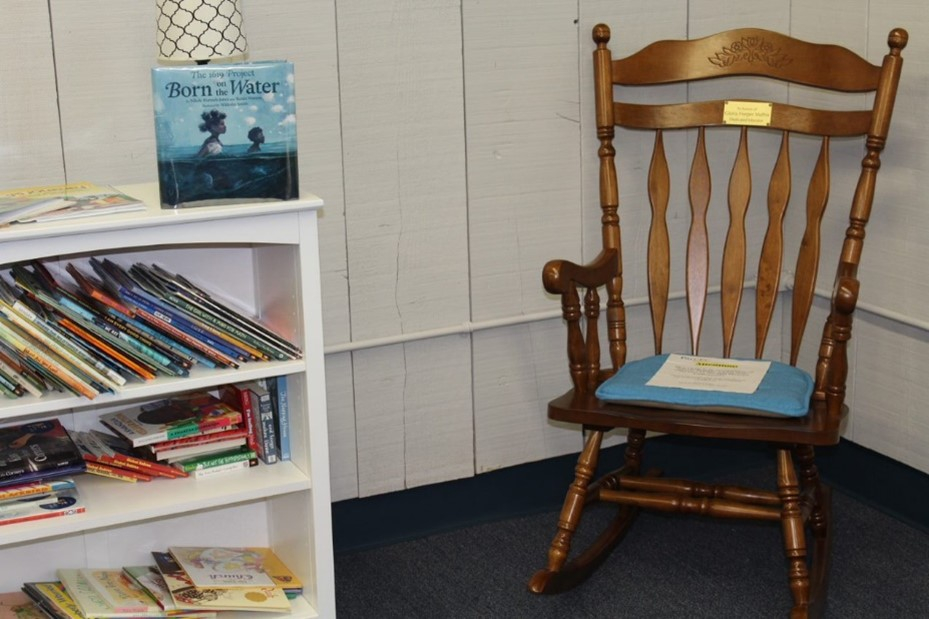
We walk through the doors to the first stop, which is the large multi-purpose room on the first floor. The space instantly opens up with calm sky-blue tones making an appearance, creating an environment of endless imagination and mutual trust. As we move to sit on the sofas comfortably situated to one side of the room, a feeling of relaxation takes over. These sofas, along with the remarkable rocking chair nestled in the corner of the first-floor multipurpose room aside a colorful bookshelf, create a cozy reading area. To members of the community, this space holds a deeper significance as the engraving on the rocking chair reads, “In Honor of Gloria Harper Mathis, Dedicated Educator”. This rocking chair was donated to the Hill CEC to serve as a memorial in the name of Gloria Harper Mathis, a prominent Hill District teacher and educator, who allowed students to grow and flourish. The chair gives community members a personal connection to associate with the space while simultaneously reflecting the CEC’s goals in educating the youth to create more opportunities for academic and personal growth. The bookshelf also showcases children’s books written by local authors, which further reflect the very community that the organization aims to represent and serve.
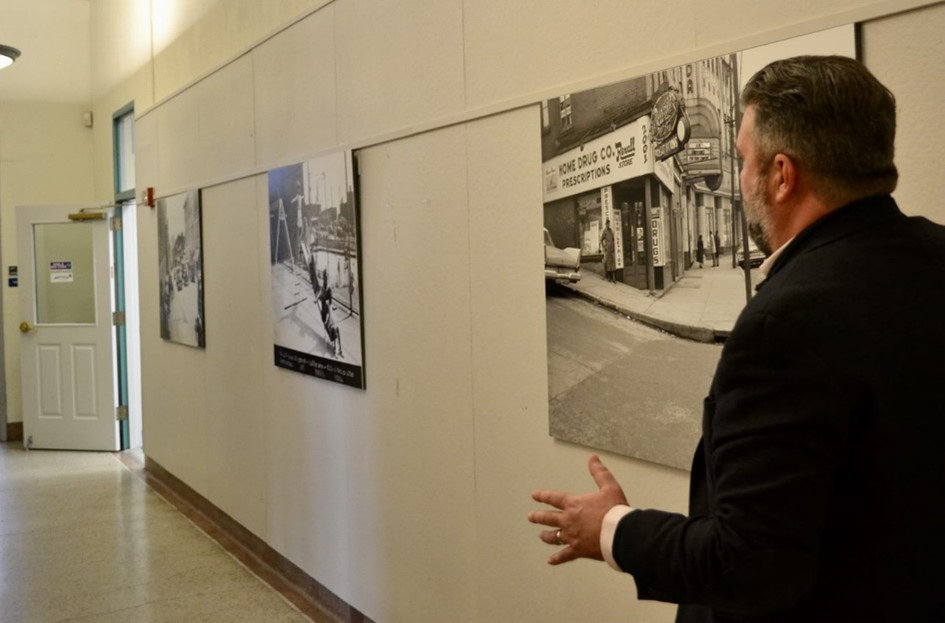
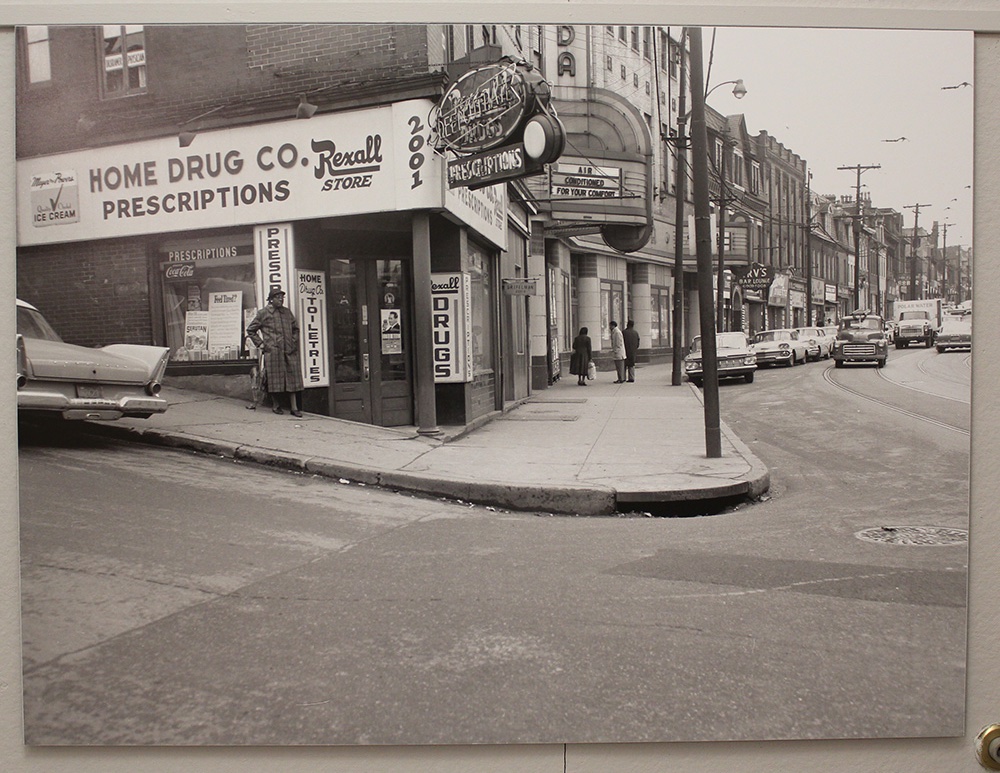
As we walk across the halls of the second floor of Blakey Center, the history of the space is expressed through documentary style photographs taken by local Pittsburgh talent. The narrative begins with a photograph spotlighting the magnificent New Granada Theater amongst numerous other buildings. A place of culture and comfort, the bustling theater attracted people of the community from all walks of life. The next image strikes the eye as we see children playing on a slide at the local Ammon playground. Children from different backgrounds gather in one place to engage in activities together. The pure enjoyment experienced by such children in the photograph is carried over to represent the way in which community members and children use the current space to engage with each other. The art on these walls can be quite emotionally stimulating for residents of the Hill Districts as they recollect memories and experiences. The hallway depicts the rich history of the neighborhood by connecting different aspects of the community to the space while showcasing the role of Blakey Center as a fitting location to represent the Hill CEC.
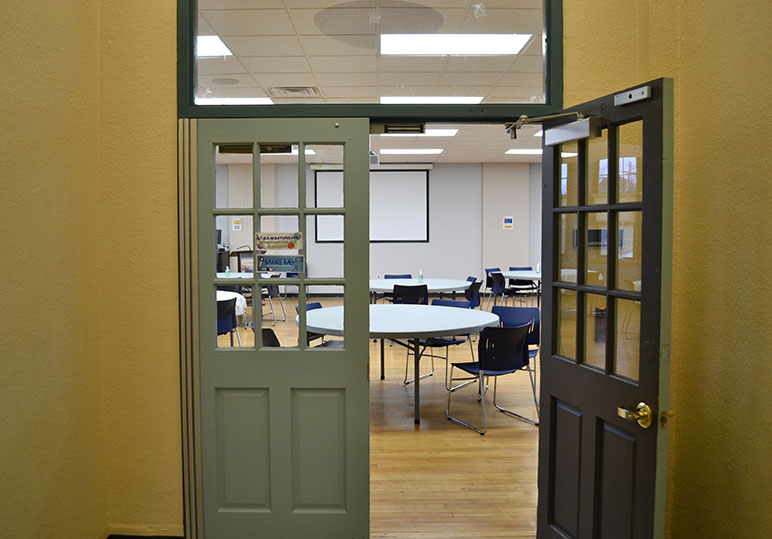
As we make our way along the hallway toward the doors to the second-floor multipurpose room, the shift back to yellow and green tones invokes feelings of liveliness and joy as we enter the large, vibrant room. In one corner, we see visible gray and red markings left on the wooden floor. These markings were created by countless basketball games conducted in that very room when it was home to the Kay Boys’ Club. We can almost imagine the space reinvent itself into a brand-new basketball court as an exciting game takes place. We visualize groups of adolescent boys running from one end to the other, expressions of pure enjoyment on their faces. The space then becomes unique as it fills with the joy of the community’s youth during trying times. Established during dire circumstances when recreational and social activities were no longer present in daily life, the Kays Boys’ Club provided a place of comfort for mainly adolescent boys to engage with each other. This boosted morale and fostered a sense of belonging and unity for members of the community amidst the hardship. The Hill CEC currently takes on these same values by using the space to host community events promoting social engagement.
Some additional physical remnants of the past include Hebrew writing on the outside of the building, which alludes to its former function as a Hebrew Institute. The Hebrew Institute was founded with the purpose of providing Jewish education to immigrant children. This was a time when the Hill District was known as the center for Jewish life in Pittsburgh. It created a comfortable space for these children to gain knowledge about Jewish life to engage within the landscape of the community. Through the CEC, the building continues to join together members of the community with resources and opportunities for education and growth.
The Hill District CEC preserves the culture of the Hill District by incorporating local artifacts representing the building’s unique histories. The organization simultaneously helps maintain a strong sense of community within the neighborhood by utilizing a longstanding building to connect the past with the present. This is a unique space where people and history intersect and interact to create personal relationships and local partnerships. The building has always been rooted in collaborative principles based on inclusivity, and the Hill CEC strives to continue to serve the community with these same values through long-lasting commitments.