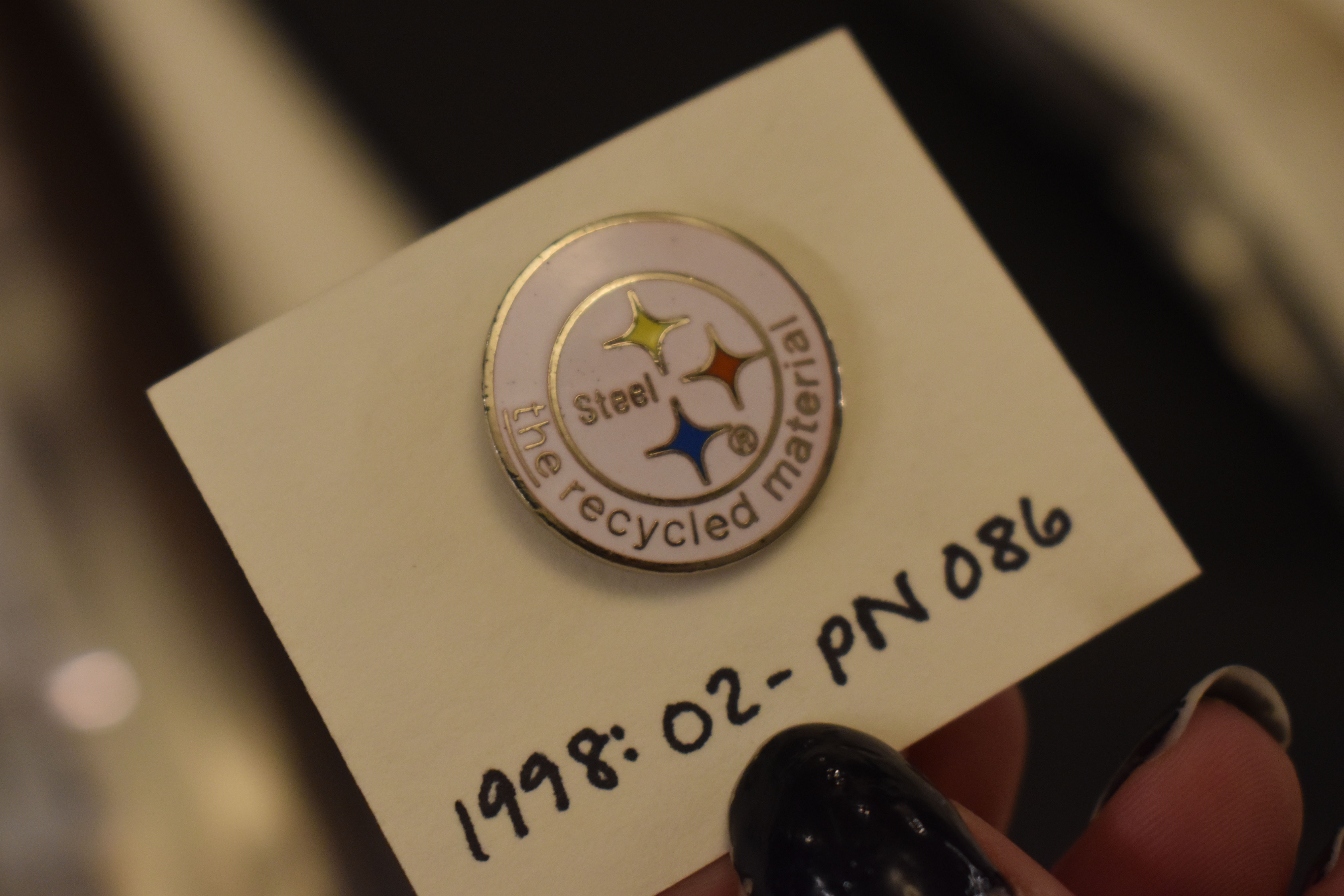
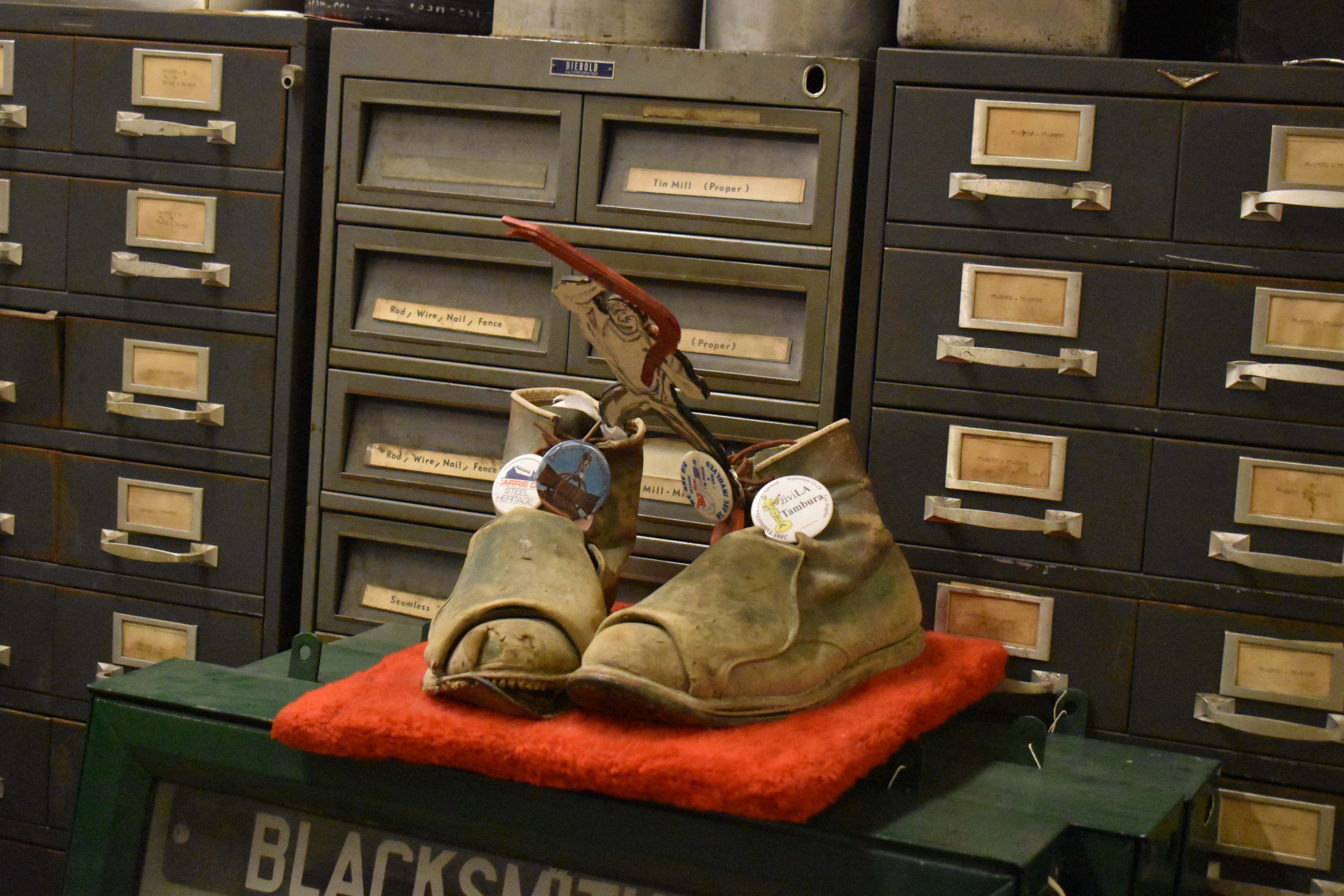
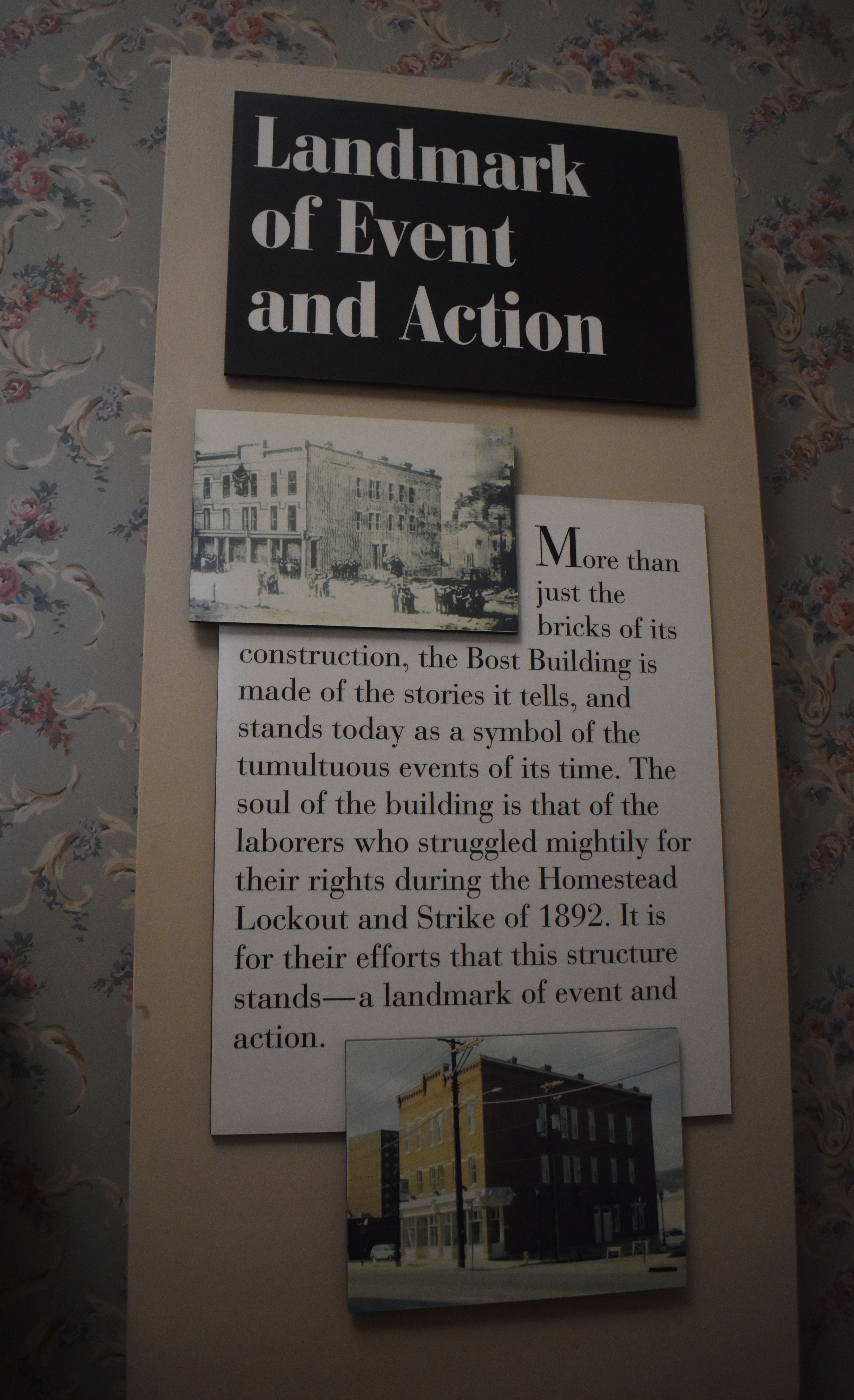
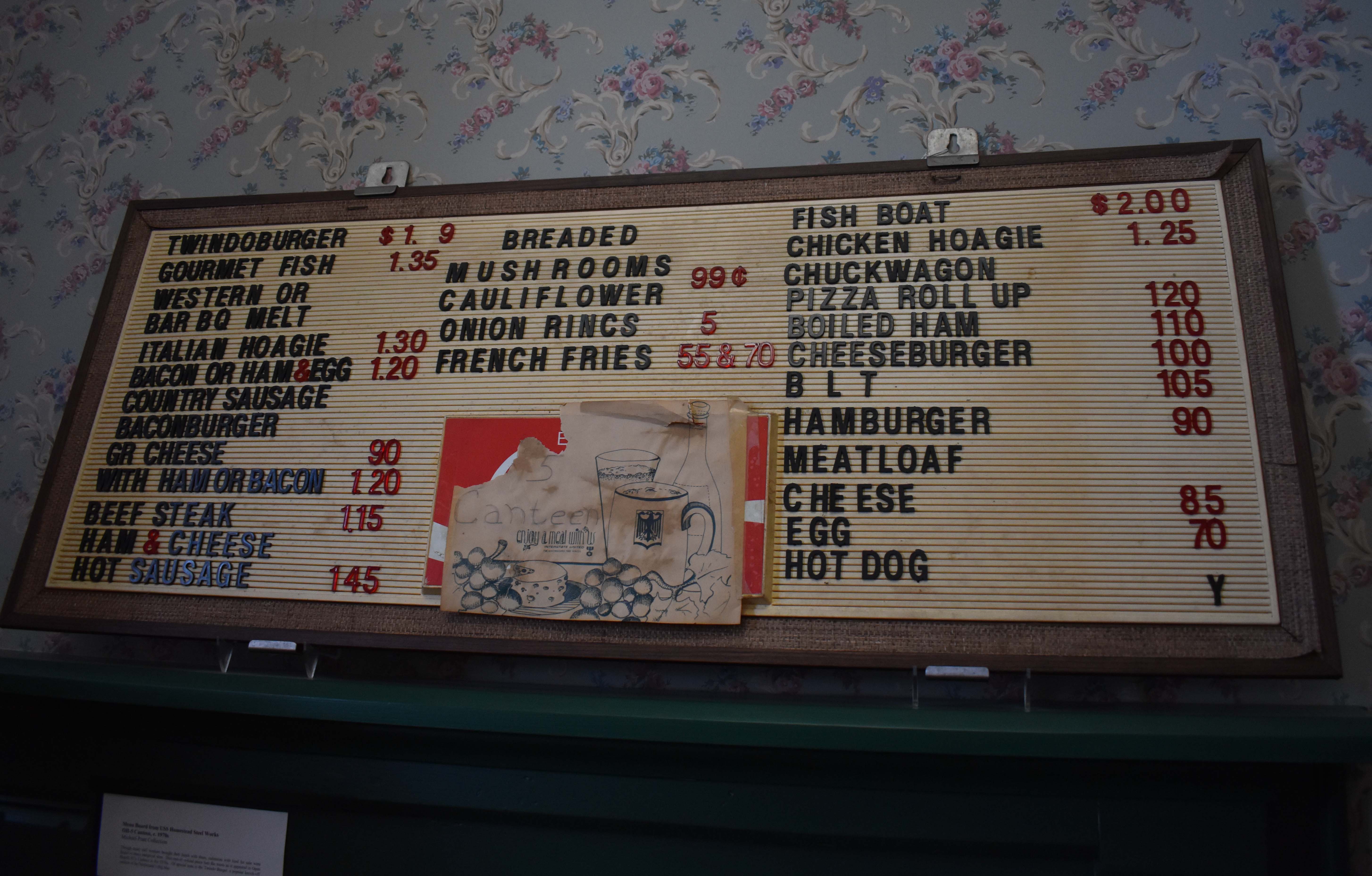
Steel union pin from the Bost Building. Photo by Jennifer Ponce Cori, 2023.
Pittsburgh’s First Steelers
This page contains the transcript, show notes, and sources for the first episode of the Secret Pittsburgh Podcast, Season One . To listen to the episode, as well as the rest in the series, visit our SoundCloud.
Transcript
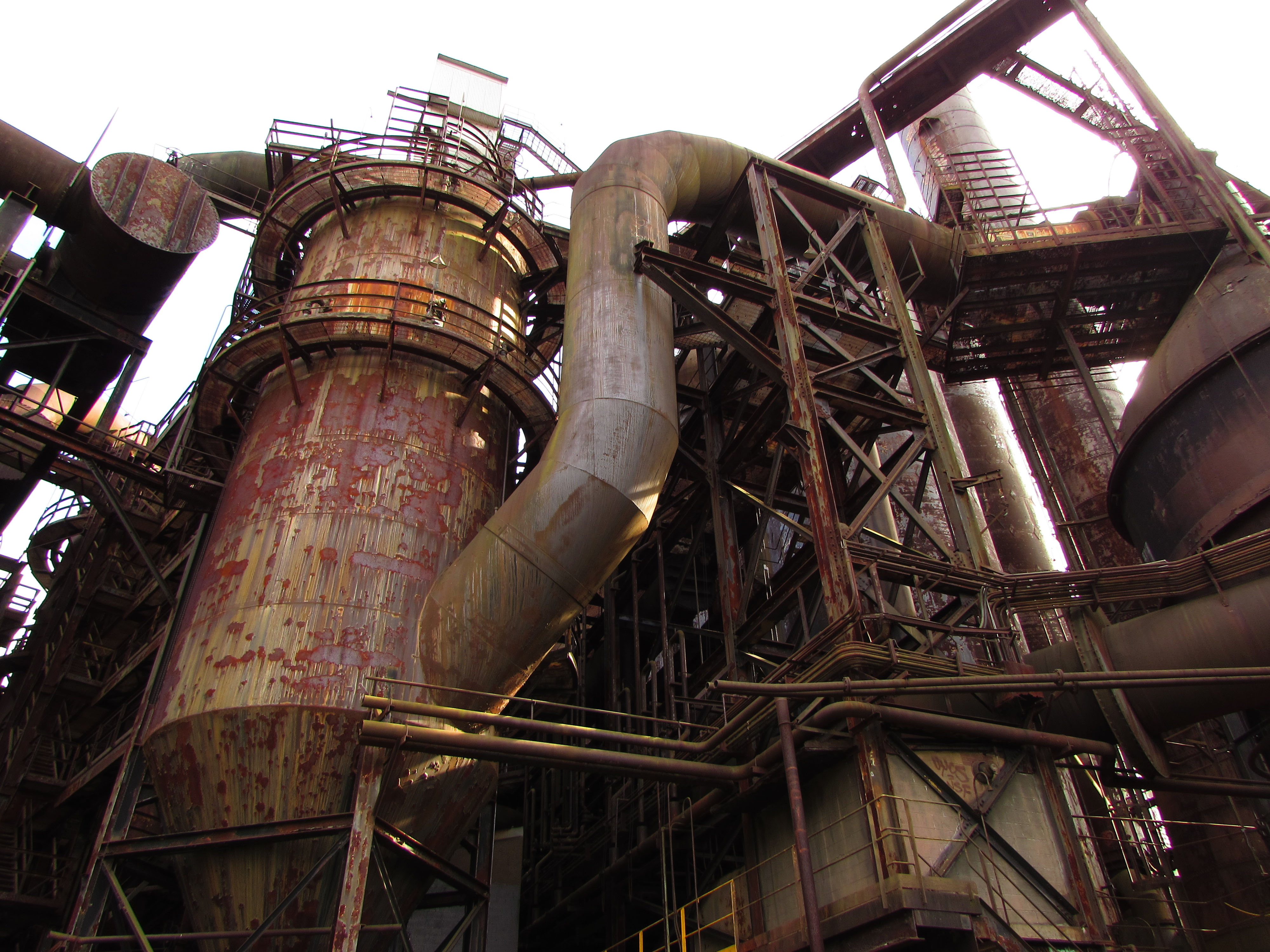
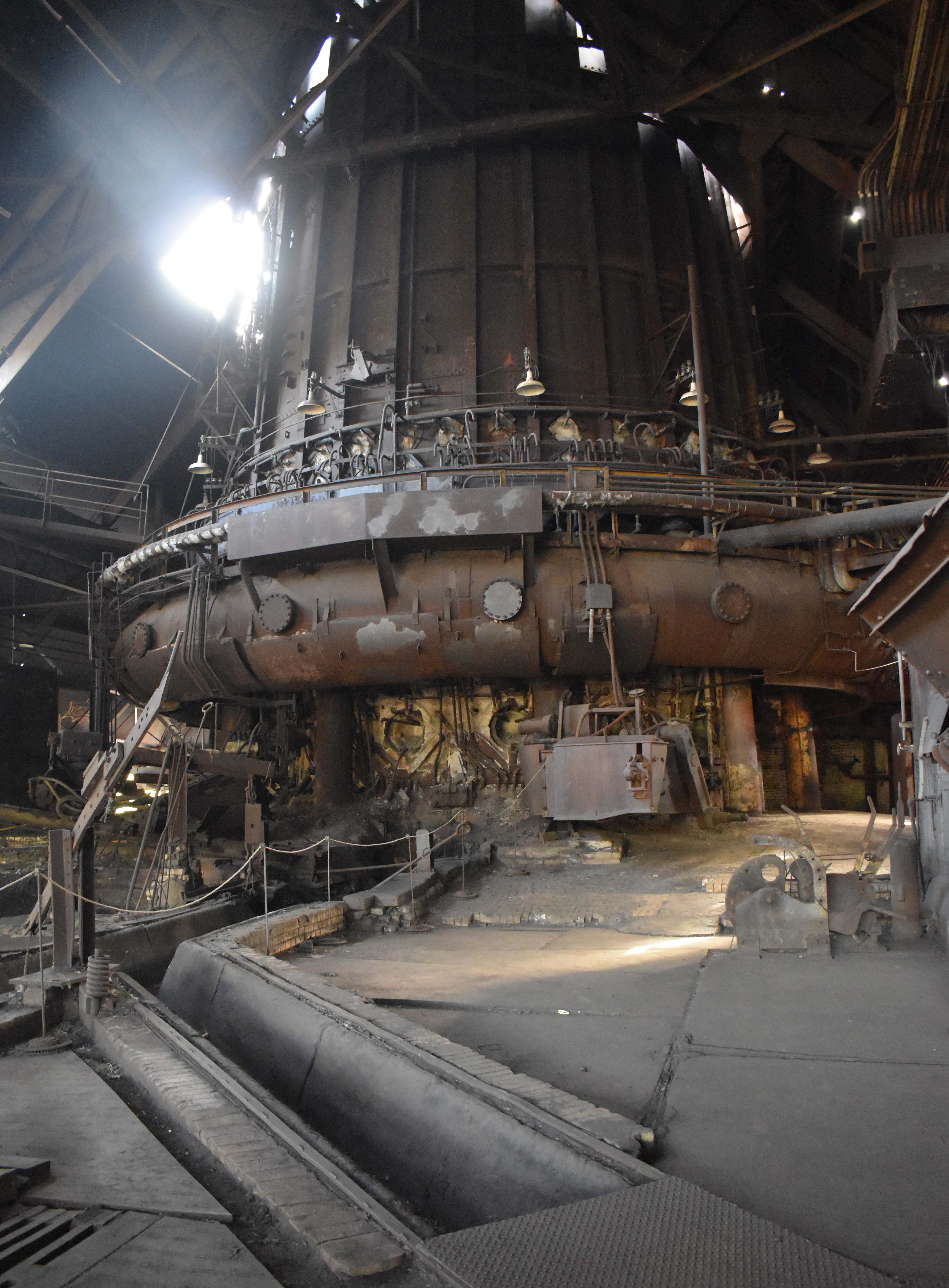
Welcome to Secret Pittsburgh. In the past 15 weeks, we’ve traveled across the city, learning the stories of Pittsburgh’s people and places. Join us as we explore the Carrie Blast Furnaces. I’m Maggie Ciesinski, let’s go.
Have you ever been to Pittsburgh or seen images of the city? If you have, then you know it’s almost inescapable to see or hear something related to the Steelers. Signs, jerseys, graffiti, everywhere you turn, these colors ring out. Walking around the streets of Pittsburgh, black and gold seem almost essential to the very being that a Pittsburgher carries with them. Why then is the seemingly trivial aspect of the city so important to so many? Sure, football is great, as any Pittsburgh resident would tell you, but what makes this team inspire 300, 000 people?
The main drive for this is community and a sense of belonging. The second you put on a jersey or show your support, you are enveloped by the outreached hands of Pittsburgh. You do not have to worry about being alone. As this city is with you when you wear black and gold. Steelers football is a show of grit and hard work.
Football is a grueling sport and any fan will tell you that the Steelers will fight tooth and nail to obtain victory. This fight is also translated off of the field with the organization supporting many charities and bridging the gap of social injustice. Steeler Nation is at the heart of Pittsburgh and exemplifies many of the values that Pittsburgh was built on.
The Steelers get their name from the mill workers of the past who helped to build a city from the ground up, despite all kinds of injustices at that time. These people came from all corners of the globe with one common goal, make steel. Surprisingly, this grueling task brought about the airs of the community within the mill.
“This is what Pittsburghers were like.” We spoke with Keith Klaus, a Pittsburgh native and former steelworker. Today, Keith is a tour guide with Rivers of Steel, and he gave us some insight and stories of life in the mill. “They were very, uh, provincial. Yes, because we were made fun of by the rest of the country. Rust Belt, you know, hated that term. But from that came a maybe different sense of pride. Okay, I’ll show you. And this is the way we were. We were very proud of what we were.” These men were brothers, putting in extreme hours for little pay just to keep their families afloat. This common task brought about lifelong friendships and formed bonds that brought people from the lowest points in their lives to new heights. However, these bonds were formed at the cost of the intense hardships endured by the laborers of this time, which fused many like the steel they were producing.
This homage from the past doesn’t end with the Steeler’s name, however. Do you know where the Steeler’s logo comes from? If you’re not familiar with it, take a second to find it. This emblem comes from a union pin of these steelworkers. The three diamonds floating among the abyss of white within the emblem represents the three elements needed to make steel. Yellow for coal, orange for iron ore, and blue for steel scrap. Each is essential in the process, just as each player is essential for a team’s success.
Coming from a union pin, these elements are more than just raw materials. They are the fight for better working conditions. The fight for fair pay. The fight for African American workers to be recognized as equal to white workers of the same caliber. So while the Steelers may just be a football team to you, to many, they represent the hard work, community, and grit it takes to make it in this world.
They embody the values of the people who came before them and spawned a city in their wake. And this is where we begin our story of the true Steelers, the heart of this city.
So what was it like to work in a steel mill in the late 1800s or early 1900s? You may have a faint idea, but what these workers went through is foreign to many.
Place yourself in early Pittsburgh, and imagine you are a 30 something year old male. You moved to Pittsburgh two months ago, not out of want, but necessity. You’re afraid that your wife and two children would suffer from your lack of steady income, so you decide to make a change. North. You will go north and get a factory job, you thought. With this, you will send money back to your family so they can keep food on the table.
You meet a nice gentleman who begins to talk to you about his mill job. He says that he works at Carrie Blast Furnace and makes 10 dollars a week. This is twice as much as you made working the land in the South. Next week, you begin your journey as a steelworker.
As you trudge down the hill toward Carrie you hear the piercing sound of the mill whistle. Almost time for a shift change. You take one step over the tracks that carry carts full of hot iron to the Homestead Mill, where it will become steel. You suddenly realize that the cart is on its way toward you, and you jolt back, nearly missing the six ton apparatus. This is one of multiple near death experiences you will have this day.
You climb the stairs to your job location and see the night crew, covered in soot and looking tired as ever. You listen and hear Russian, Polish, Ukrainian, and Spanish. The mills have created a place for immigrant workers, exploitative or helpful to the new citizens. This is for you to decide.
Through these dialects, you hear talks of striking. Your coworkers are fed up with the working conditions and little pay. They talk of holding the lines at the Homestead Mill, using violence to get their point across. You know better than to engage with this talk. As you know, the newly implemented mill police will have you fired on the spot. Or worse.
You clock in using your paper time punch and swap the battered man in your place after you put on the wool apron that covers barely more than your clothes. Your job is to keep the iron flowing down the narrow track headed for collection. The iron flows from the furnace at nearly 3, 000 degrees Fahrenheit.
As you push it using the narrow metal rod that weighs nearly 50 pounds, you can feel the heat singe the hair on your face. Your shoulders burn from the weight of the rod. After food and rent You’re sending back only 5 dollars a week. The cycle continues.
Fast forward, you’ve finally managed to save enough money to get a train ticket for your wife and two children for Pittsburgh. You’re excited for the first time since coming here, and can’t wait to see your family after two long years. This is your new life, you think to yourself, as you lace up your boots, back to the mill.
For nearly a century, for thousands of workers and their families, this was life at Carrie Blast Furnace. The Iron Mill began operation in 1884, built by brothers H. C. and W. C. Frownes it was christened with champagne and a first fire by their cousin, Cary Clark, the mill’s namesake. The iron forged at Carrie supplied the surrounding steel mills, including the Edgar Thompson Works in Braddock and the Homestead Works across the Monongahela River. Both owned by steel baron Andrew Carnegie.
In an effort to maximize profits and minimize spending across his mills, Carnegie and his partners purchased it in 1898. They incorporated Carrie and those who worked there into the larger Homestead works. From then until Carrie’s closing, iron traveled the Monongahela River straight to Homestead, where mill workers turned it into the steel that built America’s cars, buildings, and appliances. Then the war’s tanks, planes, submarines, and arms. And finally, the rust that coated the people and communities left abandoned by its closing.
Operating seven days a week, for 24 hours a day, the Carrie Blast Furnace produced massive amounts of iron. Men worked 12 hour shifts, as it was less expensive for Carnegie. The grueling labor paid off for Carnegie, and Carrie broke multiple world records for the amount of iron produced in a single day throughout its operation. The company saw prosperity for its bottom line. While the World Wars brought Europe to its knees, they brought Carrie and U. S. steel glory and fortune.
Allied forces were buying up Pittsburgh made steel for the war effort. The desperation brought by the war proved good for supply and demand. Pittsburgh mill workers who had not been drafted or enlisted continue on in their labor. For many of the Polish and Eastern European immigrants with family on the front, their work in Pittsburgh became a vendetta.
At this peak in production, 20, 000 people were employed at Homestead Works, and throughout its century of existence. It produced more than 200 million tons of steel. But this monstrous scale of production did not come without cost. And where Carnegie and U. S. Steel could cut financial costs, they paid instead in labor exploitation.
The history of labor across the mills is long and violent, ringing back to the earliest days of the Carnegie Steel Company. One instance is held in Pittsburgh as the bloody reminder of what the unions cost. In 1892, the price of steel was dropping. Which meant Carnegie was losing money. Carnegie and his partners wouldn’t stand for it. And the solution of one partner, Henry Clay Frick, was to lower wages. After all, steel that sells for less had to be produced for less.
At the news of lowering wages, 3, 000 of Homestead’s 3, 800 workers took to the picket line while Frick readied for war. He called in the Pinkerton Detective Agency, a private police force known for striking down labor unions.
300 of these armed men arrived at the banks of the Homestead Mill and were met by hordes of strikers. The battle that ensued lasted for 12 hours. In the end, the Pinkertons retreated, but it was hardly a victory for the Union. Frick asked the governor to call in the Pennsylvania National Guard, and 8, 500 troops were sent to Homestead to put down the strikers and send scab laborers to work.
Nearly a dozen people were killed in the Battle of Homestead. Defeats at Union efforts back decades in all of Carnegie’s mills. Even despite the bloodshed, Carnegie got his way, and the price for producing steel dropped. Remembering the Battle of Homestead, Carnegie wrote to a friend that, quote, “It’s fading, as all events do, and we are at work selling steel at one pound for half a penny.”
In the decades that followed, talk of unionizing was taboo at Cary and at Homestead. Carnegie and U. S. Steel continue to profit off of exploited laborers. Ask for a higher wage? There’s ten men who would do your job for half the pay. Injured on the job and can no longer work? You’ve been replaced. Try to unionize? Not around Frick’s mounted police force.
Not until federal and state legislation passed did U. S. Steel begin recognizing workers rights and their unions. Worker safety, fair pay, paid time off, proper breaks, pensions, each were an essential demand of the unions and each significantly contributed to the lives of the mill workers.
Barney Terrell is a researcher and tour guide with Rivers of Steel. We spoke with him about unions and the changes they brought to steel workers. “Yeah, I think, I think the biggest, the biggest changes for my money were two things. One, uh, wages, of course, uh, went up, uh, and in some cases you were, you know, you would make, that was a good middle class lifestyle, uh, but two, I think there was a lot more emphasis on safety, especially after 1919, 1920 with the great strike in 1919. So I think with the union, especially in the thirties, You start to see, again, a lot more emphasis on, a lot more emphasis on higher pay, a lot more emphasis on just better, uh, also benefits. Things like pensions, insurance, stuff like that. That again, those fraternal organizations earlier were doing.”
Now that it was U. S. Steel’s responsibility to take care of their employees, the company prioritized worker safety like never before. Where an injured worker would have once been ushered out with a few weeks pay, now brightly colored posters warned of injury and encouraged caution. Unions did not solve every problem in the mill, but with their shared voice, the interests of Carey’s and Homestead’s workers became more recognized than ever before.
Unions. Striking. Better working conditions. This all drove forward the idea of a better working life. But for what workers? All workers? Well, as many of you can guess, unions made exceptions in their progress. Many immigrants and workers of color were excluded from these groups, and denied the benefits that union membership afforded.
Among the groups affected by this, African Americans were hit the hardest. See, while there was so much diversity in these mills, and many would describe them as the cliché melting pot, racism and discrimination were all too common in the workplace. African Americans, if they could get a job in the mill, were placed in the most dangerous and unpleasant positions.
Management placed many black workers away from the steel side of production and instead toward iron production at the Carrie Blast Furnace, as these jobs were usually dirtier and riskier. If these workers were able to persevere through this, they would have taken countless racist comments and the feeling of being an outsider within a place that should have welcomed them.
As if tensions were not high enough among black workers and others at the mill, management had some gas to throw on the fire for themselves. As it turns out, African American workers were frequently used by management to break strikes. When a strike occurred, they would bring in black workers to take the place of those on strike. This allowed the company to continue functioning and hold out on unions for longer, forcing union workers to give up and return to work due to lost wages. Once the workers returned, these black strike breakers would be fired and the mill would return to normal. This increased tensions between black workers and union workers, as black workers were essentially taking their jobs and undermining the union.
It wasn’t until the early 1900s when they were allowed to take part in union groups, and even then, it was only permitted by white workers to prevent black workers from breaking their strikes. One man came along and changed everything for black workers, fighting oppression without even recognizing it.
That man is John Hughey. John Hughey worked at Carrie Blast Furnace from 1947 to 1982. It made an astonishing impact, not just on this place, but on working life in general. Once employed at Carrie Blast Furnace, John was quickly placed in a position that was less than enjoyable due to the racism in the mills.
John quickly realized that the vast majority working these less desirable jobs were African Americans. They were given very little protective equipment and asked to do extremely dangerous jobs that were often involved being exposed to harmful chemicals and nearly 3, 000 degree molten iron. He also realized that almost all of the skilled workers, whose job quality was much better than the furnace jobs that black workers were subject to, were white.
Another anomaly he noted was the job bidding system at the mill. He saw that many people were denied bids for higher positions due to their race, despite their seniority within the company. John noted these injustices and did what he thought was right and fought for better conditions. Shortly after beginning work at Carrie John Hughey became a union grievance officer, being one of the first African Americans to hold this position of power. This made him a pioneer in itself, and he would go even further. John would go on to become the head grievance officer and would use this position to bring about change within the mill. Firstly, he helped all Carrie workers by securing better heat gear and protective equipment. He also pushed for better benefits for steel workers, such as eye and dental care.
He led a strike to obtain better pensions for his workers. Importantly, he was able to obtain a job bidding system that was solely based on merit, abolishing the practices of the past based on racism. This was revolutionary. At the time, John didn’t realize the civil implications of his work. Looking back, he realized how pivotal his time at Carrie was.
Overall, John Hughey was able to obtain better working conditions for all workers at Carrie. He especially enhanced the lives of black laborers, such as squashing oppression, and get the recognition deserved. This not only affected mill workers, but resonated in other sectors of labor, and solidified the values that have remained till today. John Huey is an unsung hero from Pittsburgh, and his story must be heard.
With the 1970s, the American steel industry began to shatter. Steel production was being sourced overseas for lower prices than could be offered in Pittsburgh. Suddenly, the massive Homestead Works was simply too big to sustain, and little by little, it fell apart.
Layoffs occurred gradually over the next two decades. The mill that had brought together workers from across continents, oceans, dialects, and races crumbled, leaving them and their families standing in the ashes.
In the years that followed, the mills along the Mon Valley closed one by one, and with them, Pittsburgh’s jobs diminished.
The Homestead Works and Carrie Blast Furnaces closed their doors in 1986. It’s amidst this shudder that Pittsburgh’s own Steelers finally find victory. In 1975, for the first time in franchise history, the Steelers won the National Championship title. Then they do it again a year later. In six years, the scrappy, “lovable losers” of Western Pennsylvania won four Super Bowl titles even as their city’s industry was in collapse.
After all, the team is not named for Carnegie’s ruthless business practices or the flames that once lit up the mills. It wasn’t even named for the plates of hard steel now rusting decades later. The team was instead named for the people who worked there, whose grit and desperation led them to unspeakably difficult and dangerous labor, whose strength forged skyscrapers and weapons of war.
“The guys that worked there, they had the stories. I was fortunate to go up to a local tavern called Amel’s and sit there with these guys. And it’s a Pittsburgh tradition, you throw your five dollars in the middle of the table and they keep the pitchers of beer coming while you’re talking. And maybe these guys would be kind of uptight the first pitcher but after a while they loosened up and then the stories started. And many of the times the stories would begin with, uh, glancing over either shoulder and then hunching down and saying, I really shouldn’t tell you this, but, and you would discover something new every time. These guys are fantastic to be around.”
Pittsburgh’s devotion to her team stems from that sense of self recognition.
As the rest of the country saw Pittsburgh fall to its knees, how did Pittsburgh see itself? What did the rusting have to root for? The scrappy, gritty, tough as nails city mill workers turned their faith largely to the organization that had taken their name. Because as the mills were failing, and unemployment in Allegheny and Beaver Counties were at an all time high, the Pittsburgh Steelers were football’s reigning champions, but not without a long, hard road.
The Steelers knew years of failing and being disregarded, something a mill worker would have recognized all too well. It takes a kind of faith to believe in a team that has been through such ups and downs. But as Ed Simon recalls in his book, An Alternative History of Pittsburgh, “It’s easy for some to condescend this sort of faith, but that’s to miss the point of religion, the binding together of desperate people.”
Thank you for joining us as we uncovered one story from the Carrie Blast Furnace. We hope you're inspired to visit this place and find your own Pittsburgh stories. Please tune in to all of the episodes produced with Secret Pittsburgh. You can find show notes and a transcript at secret-test.local/. My name is Maggie Ciesinski. Diego Cuevas served as audio editor. Jennifer Ponce Cori and Nickolas Kelly wrote and researched this episode and performed interviews. See yinz later!
Show Notes
Thank you so much to Dr. Paine from Rivers of Steel for spending the day with us at the Bost Building and being an excellent source of information.
Thank you to Robert and the Pitt Media Creation Lab for the equipment used to record this podcast.
At these web pages, you can find more information about Rivers of Steel, Black workers at Carrie, and the Bost Building.
Bibliography
Henderson, Ryan. Rivers of Steel, 18 Feb. 2021, https://riversofsteel.com/black-workers-at-carrie/.
Paine, Kirsten L. Carrie Clark: She Who Lit the Fire, Rivers of Steel, 9 Mar. 2023, https://riversofsteel.com/carrie-clark-she-who-lit-the-flame/?_gl=1*1box61u*_ga*MTA4ODAyNjQ2OS4xNzAwMDA0MjIx*_up*MQ.
Roth, Mark. “Homestead Works: Steel Lives in Its Stories.” Pittsburgh Post Gazette, 30 July 2006,https://www.post-gazette.com/businessnews/2006/07/30/Homestead-Works-Steel-lives-in-its-stories/stories/200607300258.
Serrin, William. “A CHAPTER OF INDUSTRIAL HISTORY CLOSES WITH THE HOMESTEAD STEEL WORKS.” The New York Times, 27 July 1986, https://www.nytimes.com/1986/07/27/us/a-chapter-of-industrial-history-closes-with-the-homestead-steel-works.html.
Simon, Ed. An Alternative History of Pittsburgh. Belt Publishing, 2021.
“The Strike at Homestead Mill.” PBS, Public Broadcasting Service, www.pbs.org/wgbh/americanexperience/features/carnegie-strike-homestead-mill/.