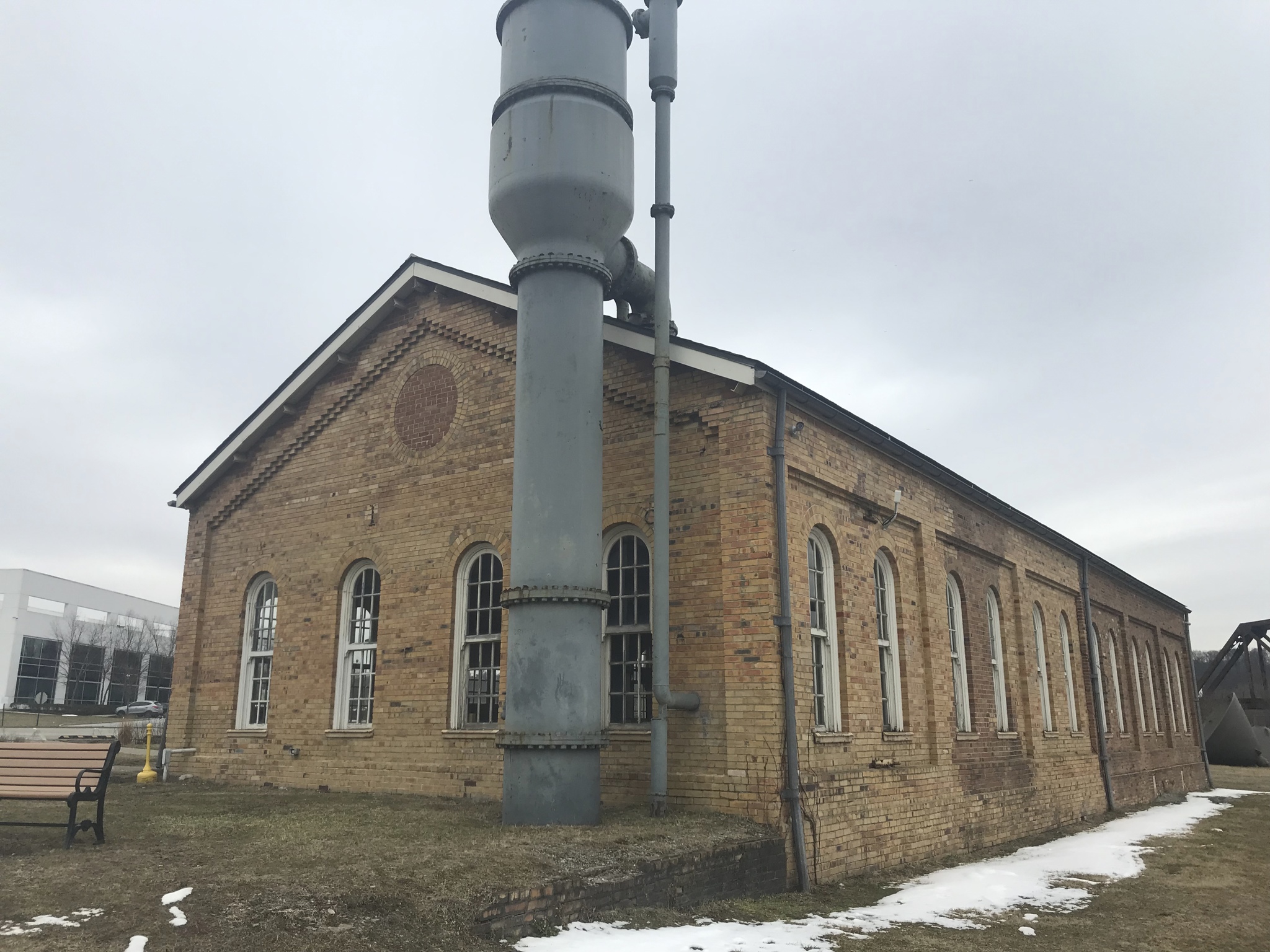
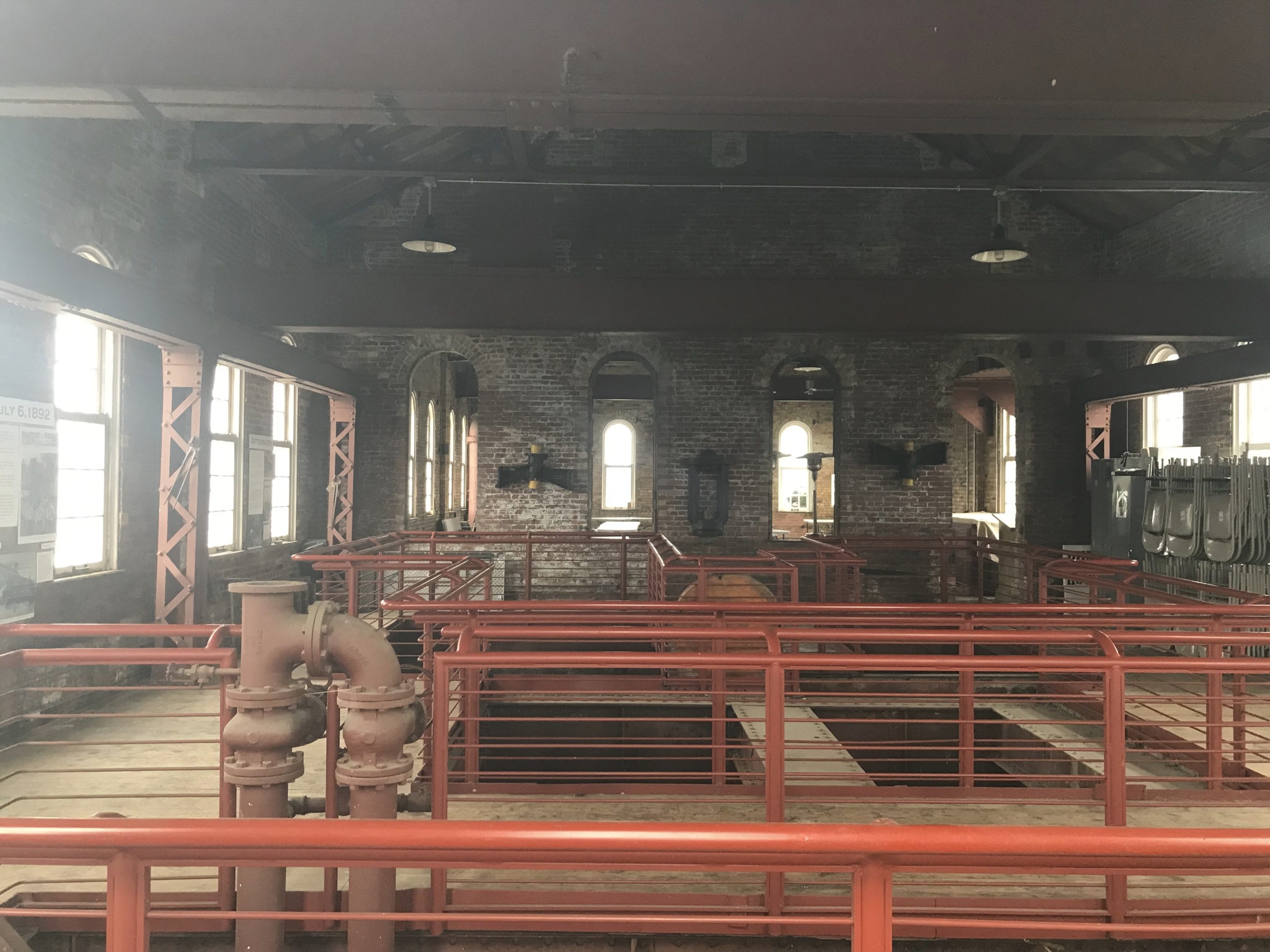
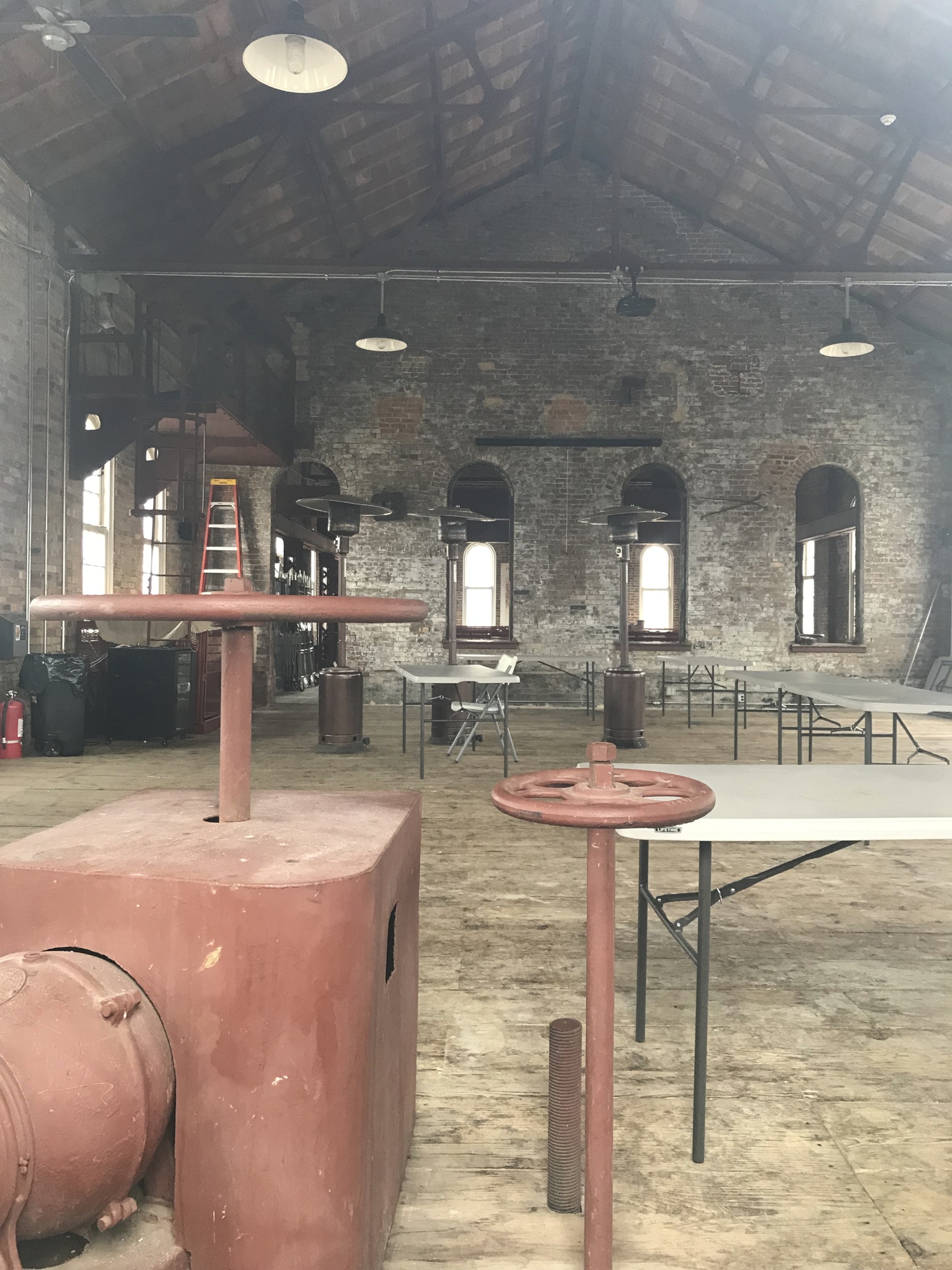
Modern Pump House, Picture by Evan Bolette
The Current Pump House
Walking up to the Pump House one would never had assumed that a battle had occurred there. There is an asphalt driveway in the front and wooden picnic tables at the side, a bike trail in the back right and bike racks in front of the building. When I first learned that the Pump House was now used for recreational purposes, I was a bit perturbed and unsettled. How could the site of the bloodiest battle in labor history now be a place where people ride bikes and children play? I decided to further investigate and find out exactly what events are scheduled to occur at the Pump House during the summer and fall of 2019 through the events calendar on the Battle of Homestead Foundation website (https://battleofhomestead.org/bhf/events/) and how they related to the previous usage. In the end, I discovered that many of the events that are held in the Pump House would have been supported by the steelworkers’ union and can be divided into distinctive categories.
Past
Pump houses, in general, were structures that contained irrigation parts needed to operate pumping mechanisms that would force water from a river or other source into a water storage tower. This water was then circulated throughout the steel plant to cool machinery and freshly-foraged steel. The Pump House was built in 1891 as an amendment to the Homestead Steel Works to pull water from the Monongahela River, eventually reaching 7 million gallons a day (“Rivers of Steel Homestead Works Walking Tour”). In 1911, the building was expanded to the size it is today… double its original size! The Pump House was abandoned in 1986 with the rest of the Homestead plant.
Present
In 2002, the Pump House was given to the Rivers of Steel organization. This organization helps to preserve and maintain historical locations related to the steel industry. Rivers of Steel intended to use the dormant space for events such as meetings, plays, or other activities. The modern events held at the Pump House can be divided into five categories: educational, performance, community-based, active, and personal.
Educational
The educational section can further be divided by the type: historical, political, and informational.
One of the missions of the Rivers of Steel organization in taking over Pump House operations was to highlight its historical element. While many signs about the Pump House and the Battle of Homestead are placed around the area, live events provide information about a variety subjects that could be appealing to wider audience. For example, one event for the summer of 2019 planned is the Bridges from History series where historians are brought in to talk about historical events related to the working class, the first one being about the post-war era of 1919.
Historically, the Pump House has been a meeting place for political gatherings, exemplified by meetings of the steelworkers’ union as well as the strike. This theme has carried to the modern use as many of the events located there make a political statement. One of the most blatant examples is an upcoming program entitled “Family Separation at the Border: Its Impact on Pittsburgh a ‘Welcoming City.’” During this program, Guillermo Perez, founder of Pittsburgh’s Labor Council for Latin American Advancement, will talk about issues with migrants seeking asylum in Pittsburgh.
In addition to both historical and political programs, the Pump House hosts events that present information about topics related to the labor industry that would be harder to find elsewhere. For example, the program “Building Alliances for Tomorrow’s Workforce: New Voices, Technology, and Ideas” teaches individuals how to apprentice in one of many skilled labor unions.
Performance
The next category of events held at the Pump House are performance-based events. Inside the Pump House, there is a small stage area where plays, vocalists, or other groups could perform. In September 2017, the Battle of Homestead Foundation sponsored a play that told the story of the Battle of Homestead. This summer, there will be a recital in which people sing about “Promise and Protest”, showing the diversity of music. The performances at the Pump House tend to carry some historical significance that would have been supported by former workers. Typically, the plays and performances put on at the Pump House are free to the general public to come enjoy.
Community-Based
In contrast the previous events that comprised a very specific niche, the Pump House also holds events that appeal to the general public. For example, during the summer as well as once during the fall and December, the Pump House hosts a market that sells local produce and products. In addition, at the fall event, there is sometimes pumpkin painting and other fall activities for kids to enjoy. This event could appeal to the community as a whole as anyone could come support their local businesses.
At Your Convenience
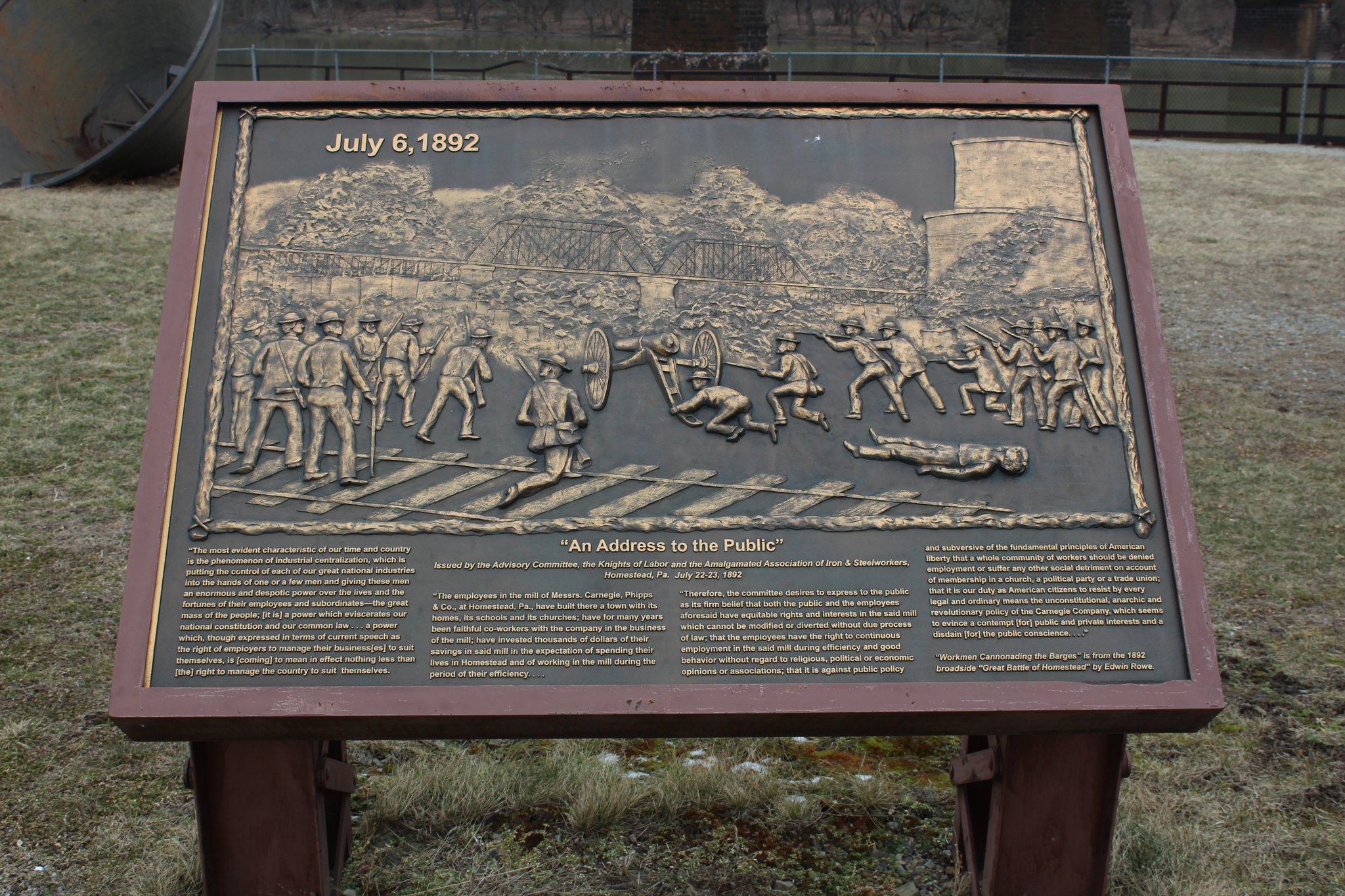
To accompany the functions held at the Pump House, there are trail and picnic tables that one can use at their leisure. In fact, the Pump House is the trailhead for both the Steel Valley Trail and the larger Great Allegheny Passage, which work well as there is a parking lot for your car. There are also picnic tables where you could eat or sit and enjoy the weather. On the side of the Pump House, there is a lot of green space that could be used to play frisbee, lay in the sun, or do any other outdoor activities. These activities are appropriate for this space as it gives people the opportunity to learn more about the Battle of Homestead through signs in the area.
Personal
So far, all of the activities I have mentioned are facilitated by organizations that maintain the Pump House. However, if you wanted to hold a personal event, the space can be rented out. Since the building can only hold about 150 people, most events are held there during the summer. The space is rented out for many occasions; however, when I searched Instagram for the location, wedding pictures appeared most commonly. I also found evidence of barbecues, carnivals, and photoshoots. To rent out the space, contact the Director of Administration, https://www.riversofsteel.com/contact/.
Response to Modern Day Usage
Above, I have discussed many of the modern-day events held at the historical Pump House, but what do people think of events like weddings and plays being held on the site of one of the bloodiest battles in labor history? I think the answer to this concept lies in the difference between lived and conceived space as explained by Edward Soja.
According to Soja, conceived space is how a person projects their ideas and thoughts onto a space, even if not necessarily objectively true. If someone thinks of the Pump House as a site of a previous battle, they may conceive that the space should be untouchable to the public as they think of it as solemn, memorial site. Lived space is how a person’s interactions with the space shape their view. This could affect someone’s opinion of the Pump House. If the person visits and spends time in the yard and the building, they may be more likely to see the space as a place where it would be acceptable to host events and other activities since nothing is being harmed or ruined in the process. I believe that lived space can overthrow conceived space as a person could think of the site as only a historical memorial place, then after they visit, see the benefit of holding events here.
In order to determine public opinion of using the space as an event site, I looked at reviews on both Yelp and Facebook for the Pump House. On Yelp, there were only good reviews, giving 4 or 5 stars to the space; however, one of the reviewers did discuss the irony of a strip mall being built next to the previous Battle of Homestead. On Facebook, there were no written reviews, but the site had an overall ranking of 4.6/5 stars. This combined with the fact that when I searched for protests at this site, none appeared, indicates to me that most people have not had any issues with using the site for events. Although, this is just information from two sources, the opposers to events at the Pump House could still be out there. I, myself, was an opposer before this investigation. Looking through the calendar and visually seeing that many of the events relate to labor industries or reform helped me to rationalize using the space for events. All in all, I believe the programs held at the Pump House help to spread knowledge of the historical events that occurred there and how society today can avoid repeating them.
Works Cited
“BHF Event Calender.” The Battle of Homestead Foundation, https://battleofhomestead.org/bhf/events/.
C., Rachel, et al. “The Pump House – Munhall, PA.” Yelp, 2015, www.yelp.com/biz/the-pump-house-munhall.
Hudson, Yvonne. “The Homestead Strike of 1892.” Pittsburgh in the Round, 18 Sept. 2017, www.pghintheround.com/homestead-strike-1892/
“Rivers of Steel: The Pump House.” Facebook, 2019, www.facebook.com/pg/RiversOfSteelThePumpHouse/events/?ref=page_internal.
“Rivers of Steel: The Pump House on Instagram • Photos and Videos.” Instagram, 2019, www.instagram.com/explore/locations/341381166/rivers-of-steel-the-pump-house/.
“Homestead Works.” Rivers of Steel. Walking Tour. 4/25/2019. http://www.touranytime.org/tours/works/. Tour stop 33.
Soja, Edward. Thirdspace: Journeys to Lost Angeles and Ither Real-and-Imagined Places. Cambridge MA: Blackwell Publishing Inc., 1996. 53-70.
“Steel Valley Trail Council.” Steel Valley Trail Council, 2019, steelvalleytrail.org/.
“Welcome to the Historic Pump House.” Rivers of Steel – Welcome to the Historic Pump House, 2019, www.riversofsteel.com/preservation/heritage-sites/battle-of-homestead/.