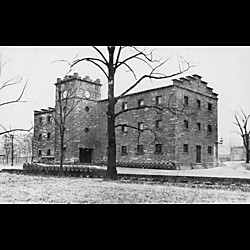
Allegheny Arsenal, photograph by unknown 1870
Factory Life to an Accessible Swing: A Change in Perception
Children are an important aspect in many societies. In fact, they are highly valued. In the United States today, children are seen as the future. Their innocence and young demeanor leave them with much needed guidance, nourishment, and assistance. They are the factors in which we, policy makers, families, presidents, school boards, and so on, keep in mind through the many decisions made each day that will impact their lives. Children today have a lot more luxuries and protections than they once had. They are required to go to school until a certain age and are protected by Child Labor Laws.
However, things weren’t always like this. Children were not always viewed as precious gems like they are today. Around a century and a half ago, children were not viewed as the future of societies. They were not protected and treated like kids are nowadays. There was no such thing as “play all day” and toy stores were seemingly nonexistent. A century and a half ago, they were the labor force. They were the little hands behind carefully sewn clothes, tightly packed bullet, and tending to the animals. Children, during the 1800’s were expected to do more with little to no pay than children would ever be considered to do now in the United States.
There was a time that the views and expectations of these children greatly differed from how things are today. It was the time where our country was divided, and states fought tooth and nail against what they believed was right. The North wanted to abolish slavery while the South felt as if their roots were being ripped out of the ground. It was the time during the Civil War. During this era, the South relied on enslaved people for agricultural purposes to keep their economy afloat. It was primarily in the south that enslaved children were greatly needed. Their small fingers could accomplish tasks at higher rates, however, they would burnt out quickly. These slave children had no legal rights and surely were not protected against cruelty, labor laws, and a right to an education. It would be decades before the enslaved population of the United States would gain legal rights and equal opportunities. Enslaved and free children alike were contributors to the work force many years ago.
As for the free children during the Civil War, they too had many tasks to complete. Lawrenceville, in this particular case, was home to many immigrant families during the Civil War. They needed to work in order to provide for their families. In fact, families had more children in order to execute everyday tasks and keep food on the table. Children were able to attend school, but it was nowhere near the curriculum we have today. In the North, multiple grade levels were taught in one classroom. This made it difficult to academically advance. School was not the main focus especially during the thick of the war. For instance, children were needed to work in the Allegheny Arsenal to assist the Union. The Union, who fought for the North, relied on them to produce ammunition.
Although children were needed to produce ammunition for the war, this is a perfect example of how children were viewed as merely a labor force. When the arsenal exploded due to ignited gunpowder, it resulted in “… 78 casualties, 72 were young girls/ women” (Powers 4). Children nowadays would not even be considered as candidates to work in an arsenal especially at the young age of ten to fourteen. According to the Philadelphia Archives, “inadequate or unenforced safety standards meant that workers and supervisors carelessly handled live gunpowder, and often spilled or swept gunpowder onto the ground…” (“Allegheny Arsenal”). Child safety was not a huge concern during this time simply because they were viewed as a labor force with no laws protecting their well-being. Additionally, the Lowell Offering is a continued investigation in which provides examples of children working in factories with little protection. The Lowell Offering was a magazine that was published in Massachusetts by a group of young factory girls. It’s comprised of their stories and experiences. One child says, “I toil day after day in the noisy mill. When the bell calls, I must go: and must I always stay here, and spend my days within these pent-up walls…” (Lowell Offering 136). These are the words from a young girl who was sucked into factory life for little pay. It is not only unsafe for young children to be working in factories, but it effects their mental health as well. No laws protected these children against working in such unsafe conditions. These were unfortunate events that took the lives of many young children. Whether they lost their lives or their childhood, factory life was rough and not suited for children. However, it was circumstances like these that gave authorities no choice but to find ways to protect the children of the United States.
A change in perspective is what ultimately liberated children of factory life and labor force duties. In fact, in 1938, “child labor laws were enacted to ensure that when young people work, the work is safe and does not jeopardize their health, well-being, or educational opportunities (“Child Labor”). These laws not only protected their well-being but they guaranteed children received necessary schooling and had safe work conditions. These working conditions compared to the arsenal’s conditions differed greatly. There were many events and advancements which led to the development of child rights and protection laws. Communities moved away from agricultural lifestyles as new technological advancements were occurring. This lessened the need for children to fulfill these jobs. As for the enslaved children and the effects of slavery, it took many years for African Americans to gain rights. The court case of Brown v. Board of Education enabled and ensured African Americans to equal schooling rights. Education and child rights were a long time in the making. However, with the laws enacted, children are viewed differently and seen as the future and hope of this country.
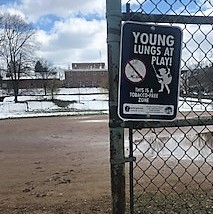
What used to be an arsenal where children gave up their time and energy is now a middle school were children learn, play, and create dreams for themselves. The area of the old arsenal stands as more than just a memorial site. It shows the progression of perspectives in children. A wheelchair accessible swing and sign saying “No smoking, young lungs at play” located at the playground speaks for itself. The park and Arsenal Middle School catapult children forward rather than holding them back by factory work.
Works Cited
“Allegheny Arsenal.” National Archives and Records Administration, National Archives and
RecordsAdministration.www.archives.gov/philadelphia/exhibits/allegheny-arsenal/allegheny-arsenal.html.
“Child Labor.” Child Labor – Wage and Hour Division (WHD) – U.S. Department of Labor, www.dol.gov/whd/childlabor.htm.
Naylor, Natalie A., et al. “The Lowell Offering: Writings by New England Mill Women (1840-1845).” Journal of the Early Republic, vol. 2, no. 2, 1982, p.136, doi: 10.2307/3122713
Powers, Tom. “Death at the Arsenal: September 17, 1862.” lhs15201.org, Lawrenceville Historical Society, Mar. 2012, www.lhs15201.org/