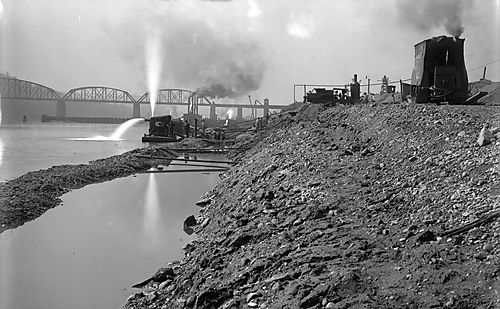
Fig. 1. Pollution in and around a Pittsburgh river; Pittsburgh City Photographer, October 3rd, 1905.
A History of Water and Recreation in Pittsburgh and Schenley Park
At the time Schenley Park was acquired by the City of Pittsburgh, the city was a hub for industrialization that caused unprecedented pollution levels resulting in smog filled streets becoming the new normal (Tarr). It carries with it stories from the past that envelop the history of Pittsburgh as an industrial hub and still survives to this day. It serves as a steady and unchanging part of Pittsburgh that people have been utilizing since its dedication. The park itself was a refuge within the city.
Figure 1 shows the desolate, polluted landscape that defined Pittsburgh in the early to mid 1900s. You can actually see the air and water pollution that’s escaping the buildings and machines in the photo. The water pollution is being pumped directly into the river, where it joins storm water and waste water from the combined sewer system. It’s an abrupt change from the serene aesthetics of Panther Hollow Lake. This landscape was all too common at this time. Thomas Bell illustrates the reality of life for those living in Pittsburgh during this time period through descriptions such as “The hills rose steep and ugly, almost bare of vegetation” and “the smoke and dust would turn into a crimson disk” (Bell 38, 49). These quotes characterize the world that people lived in and had to deal with every day. There’s no surprise that people would want to escape that reality and go to a much cleaner, wooded area such as Schenley Park. The park was a distraction that allowed for people to forget about the truth of the rest of the city. In the past, the areas outside of the park were so nonfunctional and polluted that it gave people almost no way to participate in outdoor activities without a threat to their health. With the development of areas like Panther Hollow Lake, people were able to spend time outdoors in a natural setting, escaping the polluted reality of the rest of the city.
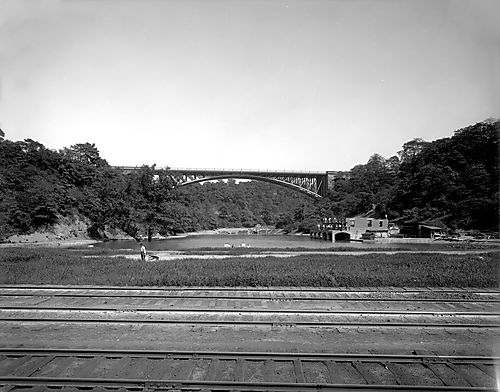
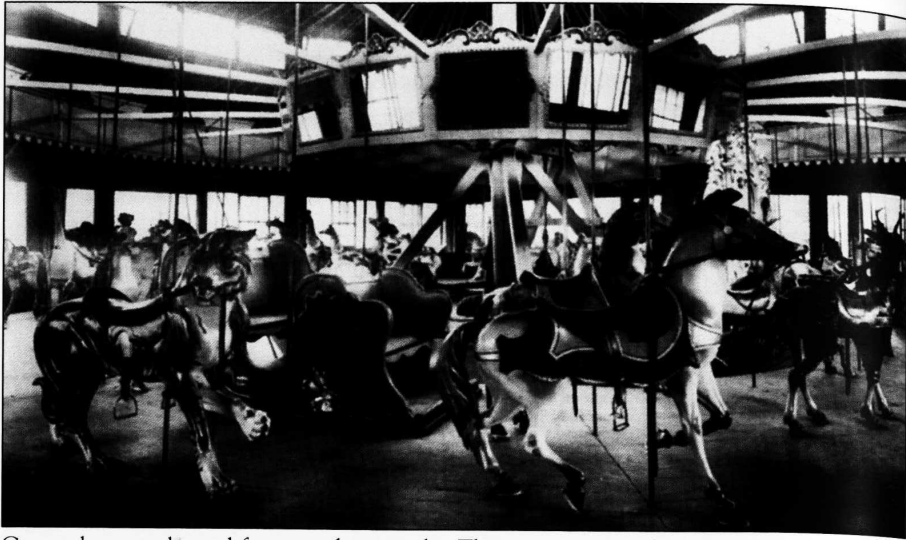
One of the main attractions was Panther Hollow Lake, which was built in 1909 (Jones) and still remains today. Figure 2 shows Panther Hollow Lake and the boathouse just one year after it was built. Schenley Park became incredibly popular. There were plenty of reasons to gravitate to the park, including “bridle trails, walking trails, a racetrack, a golf course and a carousel” (Squirrel Hill Historical Society).
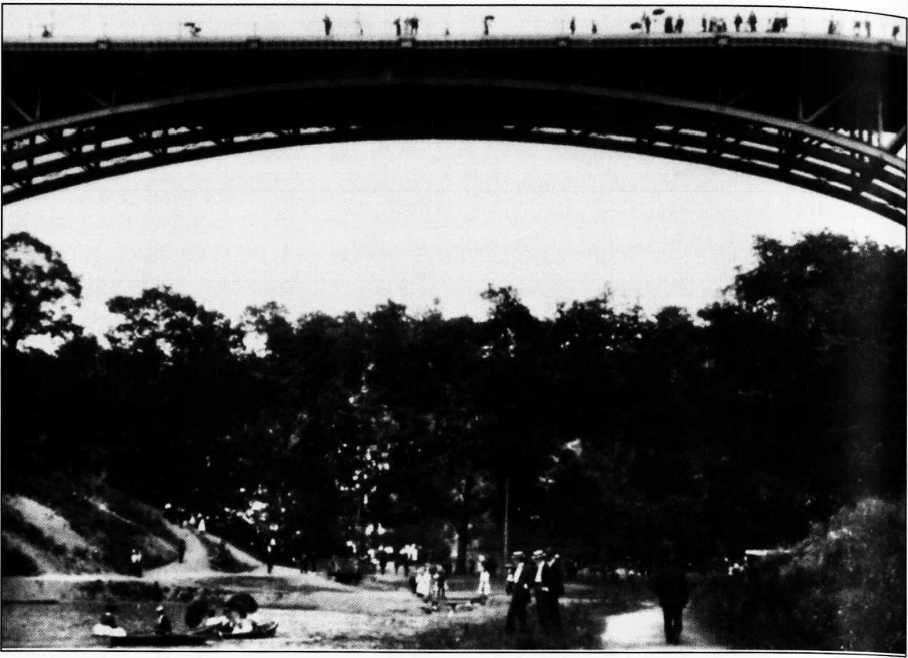
Figures 3 and 4 show how popular the park was in the early 20th century. A good number of people can be seen on and below the bridge in figure 4, which shows just how many people used the park. Much fewer people spend time around the lake than the number of people in this photo. Today, the majority of these attractions are gone, but Panther Hollow Lake is still standing. It’s not nearly the attraction it once was, and is no longer used for recreation. In fact, in 2010 the Pittsburgh Parks Conservancy stated that the lake was “unfit for human contact” and has gone through numerous renewal and cleaning processes that lack the permanent adjustment that’s needed (Jones). It seems that while Pittsburgh’s air and water quality improved from the industrial era, the water quality of Schenley Park got worse as time went on. How did Schenley, the popular natural hotspot, become what it is today? The answer lies with Pittsburgh’s water system.
The sewer system that’s currently in place comes with its fair share of problems. This system, which began in the early 19th century, is a combined sewer system, where both wastewater from people’s houses and the various sources of industry along with storm water use the same pipes. On relatively dry days, the water flows in the sewage system without causing any problems. However, whenever the city experiences relatively heavy precipitation, the sewers get overwhelmed and overflow into the rivers without being treated (Hopey). Normally, water gets collected and sent through a series of processes that clean it of debris and sediment, disinfect the water from things such as pathogens and eventually get released back for public use (PWSA). The problem that occurs with heavy rain is, this process is completely avoided and the untreated water flows directly into one of Pittsburgh’s three rivers.
As a life-long resident of Pittsburgh, this system is all too familiar. I was on my high school rowing team and we practiced for many months of the year on the Allegheny River. When I first began my time with the team, I was warned about the phenomenon that people called “CSO” (combined sewage overflow) that would flow into the river right next to our boathouse. There was even an orange flag that read “CSO in menacing black letters that the boathouse would put up on these CSO days. Unfortunately for me and my team, the majority of the days we practiced happened under the waving of that dreaded flag, and we would spend our time getting splashed with the river water. We joked that it gave us superpowers. This sewer system has been in place since the 1800s, and yet we still have to deal with it today. It is through this that we begin to see how all of the water in Pittsburgh is connected. In the time of industry and excessive pollution, any pollutants that made their way into the water spread throughout the whole city via the rivers, which is arguably worse than the current situation. However, we are still dealing with household wastewater and wastewater from (much cleaner, but still apparent) sources of industry. But how does all of this relate to Schenley Park?
Schenley Park sits in the Panther Hollow Watershed, which means that all water that falls within that watershed makes its into the park and eventually to Panther Hollow Lake (Pittsburgh Parks Conservancy). The water that ends up in the river connects back to Schenley Park, just as the water in Schenley Park makes its way to the river. Through the process of the water cycle, water from areas all over Pittsburgh is evaporated, taking some of the pollution with it and eventually falls upon the city again, even in areas like Schenley Park with no sources of pollution itself (NASA).
Through the exploration of water operations and the way that people have used the park, it’s clear that the use of Schenley Park changed drastically over the years. In the past, it was the only area that could support this recreation that was seemingly free of most pollutants that took over the air and other water sources. As time went on, and the park remained relatively fixed, the outside world was going through an incredible transformation. Air got cleaner, bodies of water became clearer and no longer full of pollutants, and people began extending their recreation to other areas of the city. Now, the park serves a different purpose than it did way back in the day. People use it for mental fulfillment, recreation and even just natural views. There’s more of a conscious effort to appreciate the parks for their natural beauty. People may still visit the parks to get out of the hustle and bustle of city life, but it’s less forced and more leisurely.
We now know that, no matter the time period, the park was not able to completely escape the impacts of air and water pollution. Everything in the city is connected by Pittsburgh’s water networks, even the seemingly unrelated and disconnected area of Schenley Park that used to serve as a central gathering place. Today, many people are pushing for a new sewer system and new ways for the city to deal with the water, as well as the push for the renewal of Panther Hollow Lake as a place for recreation (Jones). In the future, the city will most likely go through a new set of changes that will allow for completely different reasons and ways to use the park, whether the park remains connected to the city through water or not.
Works Cited
Pittsburgh City Photographer Collection, 1901-2002, AIS.1971.05, Archives & Special Collections, University of Pittsburgh Library System
“History.” 3 Rivers Wet Weather, https://www.3riverswetweather.org/about-wet-weather-issue/understanding-sewer-collection-system/history.
Hopey, Don. “Pittsburgh’s Sewage Overflow Season Starts.” Pittsburgh Post-Gazette, 1 May 2017, https://www.post-gazette.com/local/city/2017/05/02/sewage-overflow-pittsburgh-alcosan-advisory/stories/201705020065.
“Water Quality Reports.” PWSA, http://www.pgh2o.com/quality-drinking-water.
Baldwin, Leland D. “History”. PgH2O, http://www.pgh2o.com/history.
“The Water Cycle.” NASA, https://pmm.nasa.gov/education/water-cycle.
Jones, Diana N. “$1 Million given to Restore Panther Hollow Watershed.” Pittsburgh Post Gazette, 31 Aug. 2010, http://Old.post-Gazette.com/Pg/10243/1083913-53.Stm#ixzz67G0i23z7.
“Explore The Panther Hollow Watershed On This Self-Guided Tour.” Pittsburgh Parks Conservancy,, https://www.pittsburghparks.org/blog/discover-the-panther-hollow-watershed-on-this-self-guided-tour.
Bell, Thomas. Out of This Furnace. Univ. of Pittsburgh Press, 1990.
Squirrel Hill Historical Society. “Images of America: Squirrel Hill”. Arcadia Publishing, 2005.
Tarr, Joel. “The Changing Face of Pittsburgh: A Historical Perspective.” Ensuring Environmental Health in Postindustrial Cities: Workshop Summary. National Center for Biotechnology Information, 2003, https://www.ncbi.nlm.nih.gov/books/NBK222035/.