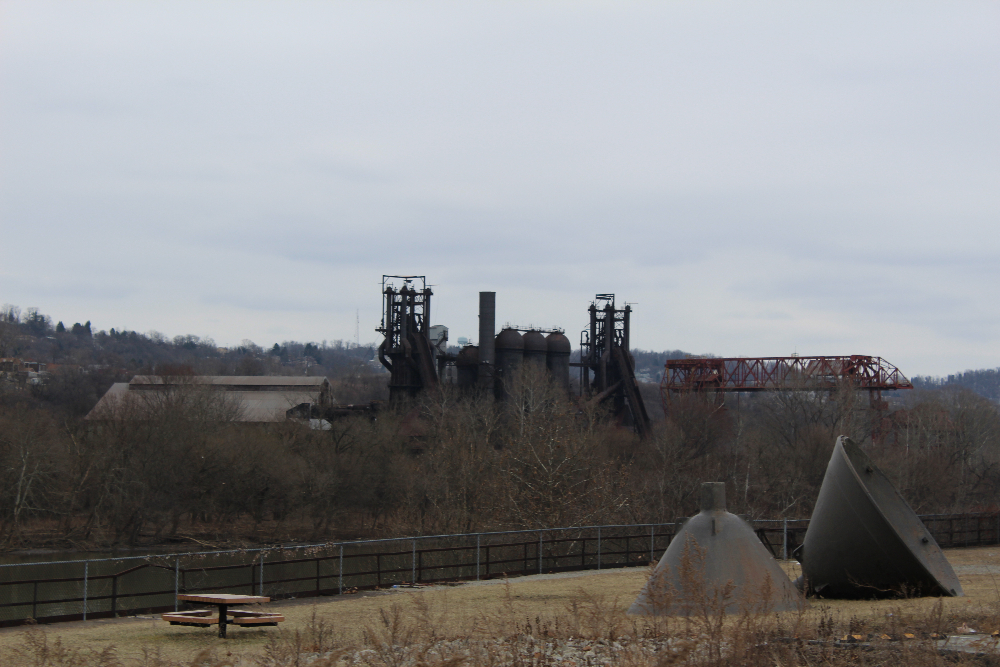
Photo By: Evan Kiebler A shot of the Carrie Furnaces from the Pump House.
The Future Plans for the Old Mill
Pittsburgh has long been proud of its moniker of the ‘Steel City’, it has been ingrained in the culture here ever since Carnegie Steel produced its first batch of steel in 1872. We’ve named our sports teams and our buildings after the mark left by the steel era of the cities history, so clearly Pittsburgh is proud of its past. However with the end of the steel era of the city, sites like these are seen by many as sitting on some valuable real estate that could be used to support the increasingly popular destination that is Pittsburgh.
A question some may have why should we preserves sites like this in the first place? They just take up space that could be used by new and exciting businesses or housing developments. While both of these options are plausible actions to take, they are based off the assumption that the historical space has no more to offer its current area, which is simply not true. These sites have a lot to offer the communities they exist in, even if they don’t provide immediate economic differences. The Community Tool Box, a free online resource for communities to bring about positive change in communities. They are advocates for historic preservation, the reasons the give are listed as:
-
“It preserves the historic, architectural, and aesthetic character and heritage of a community or area, and helps to provide a sense of place and community”
-
“It is an efficient use of resources”
-
“It preserves old methods of workmanship”
-
“It can add character and/or charm to a community, and emphasize its uniqueness”
-
“It can attract investment and change the nature of a deteriorating neighborhood or area”
-
“It can provide an opportunity for the imaginative or creative use of a building that has stood empty because it outlived its previous use, and solve a problem at the same time”
-
“It can be a good financial investment (Community Tool Box Sect 7)”
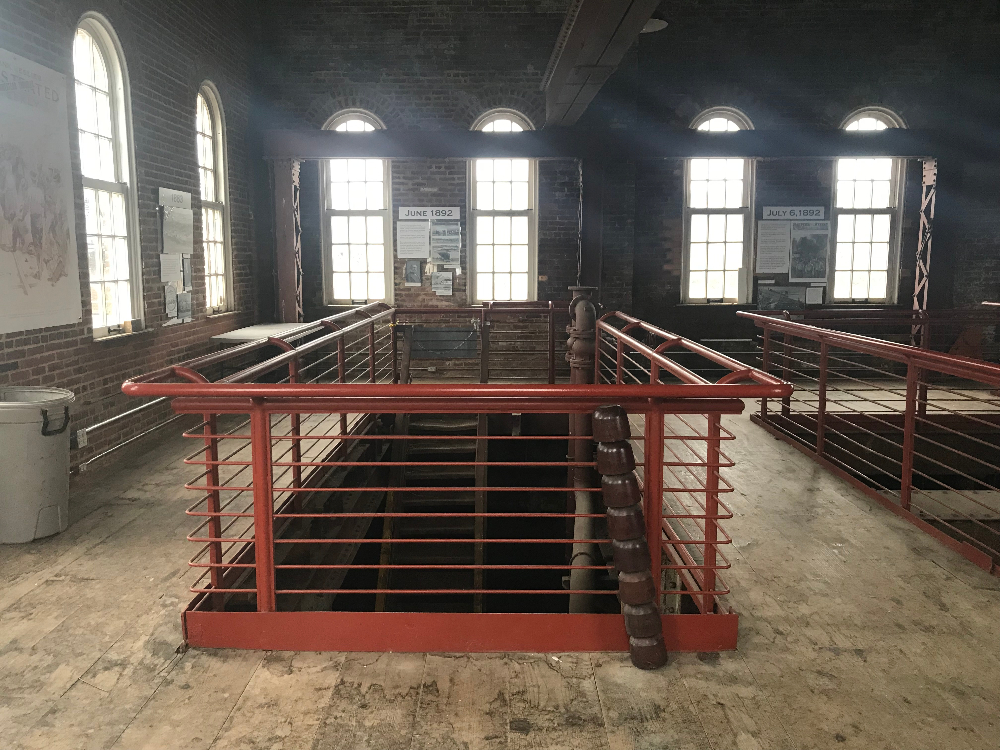
I agree with all the points The Community Toolbox Brings up, particularly in the case of Homewood. The Pump House is one of the few standing pieces of Pittsburgh’s steel industry, a time period that is well ingrained in the minds anyone that lives in Pittsburgh. It represents this era and the history behind it. It’s location is also right next to a US Steel Research building, US Steel is the company that operated the pump house in its operational days. The Pump House also gives the Homestead Area a public space, one with views of the Monongahela River. The building itself is also a unique piece of architecture. While on the outside it looks relatively plain, inside the pump house still has a chunk of the equipment used from its operational days. It also serves as a trail head for a trail that is used by commuters to bike to work, making it a multi-use space for the people of Homestead.The Pump House has transcended its previous use, but still maintains its usefulness as both a space for the people of Homestead and as a teaching to tool the History behind the great city of Pittsburgh.
The Pump House’s Current Status
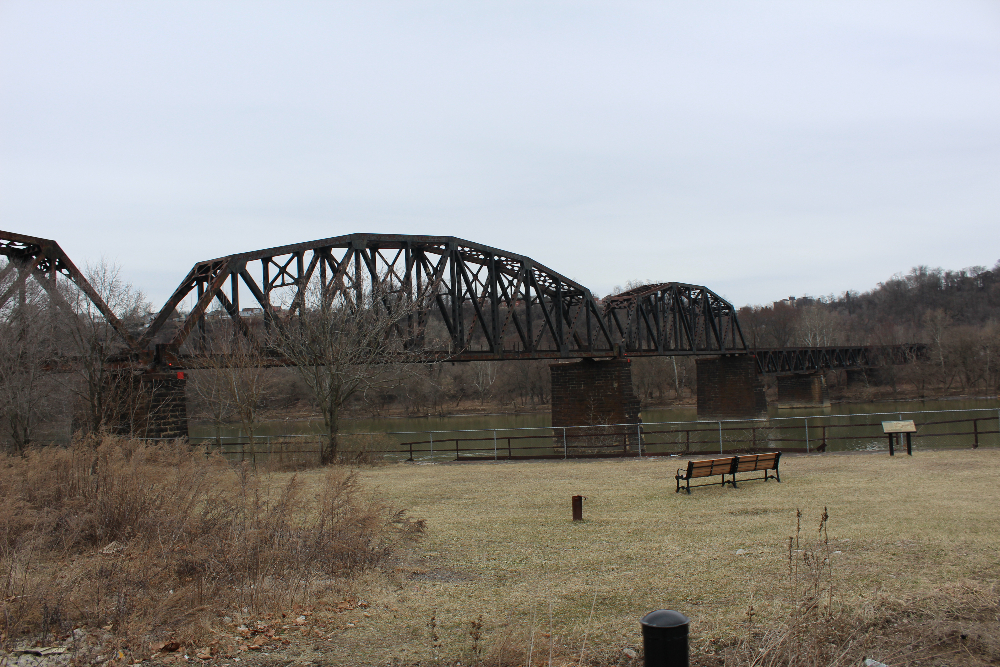
The exterior of the Pump House is open to the public every day of the week and is a trail head to the Great Allegheny Passage which encompasses the Steel Valley Trail. It is also a destination for family walks and picnics, a piece of an audio tour of the Homestead area that gives the historical background to the area. The Rivers of Steel Heritage Area also has in-person guided industrial tours that include the Pump House. Keeping this space and activities well maintained open to public, as well as just keeping the land the Pump House is built on, in the increasingly commercializing Homewood area has a significant cost. This is where the interior of the Pump House comes in.
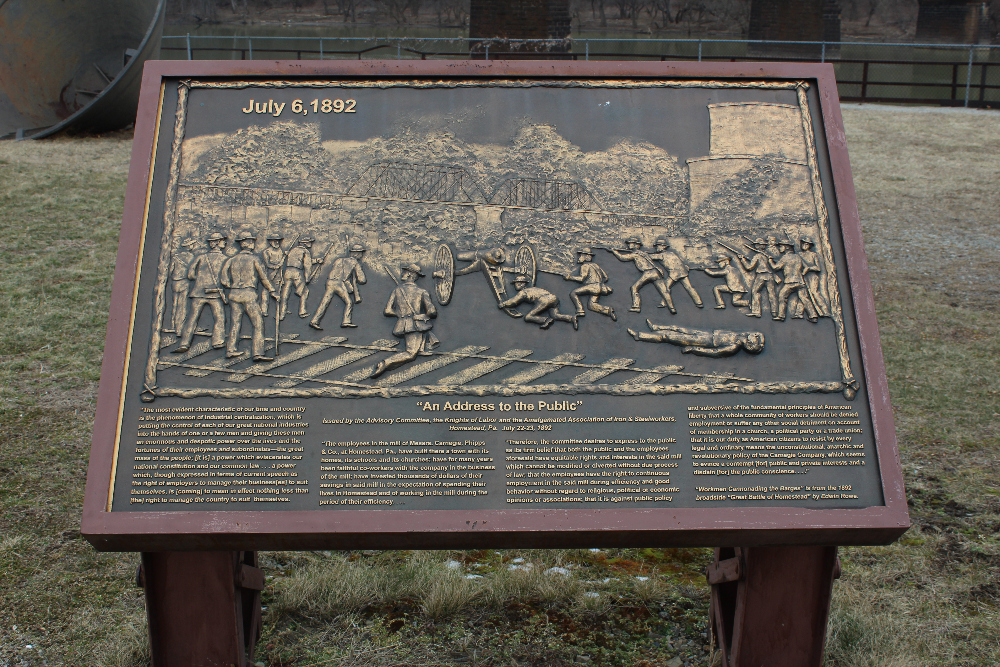
The interior of the Pump House on the other hand is not a public space, it is an event space available to rent on The Rivers of Steel Heritage Area’s website. This space is large enough to fit 150 people and is a popular for events like weddings and fundraisers. These events help the Rivers of Steel National Heritage Area generate revenue to keep the outside of the Pump House open to the public. This event style space isn’t the Rivers of Steel Heritage Area’s true goal for the Pump House, it is more out of necessity than anything else. According to their website, in the plan for making the area a National Park the Pump House “will tell the story of the 1892 Battle of Homestead that was waged between the strikers and the Pinkerton guards.(Rivers of Steel Heritage Area)” They plan on opening the interior up to the public as a space to relay the less told ‘darker side’ to the Carnegie Steel company, something that is often passed over when speaking of the ‘Steel Era’ of Pittsburgh history.
National Park Plan
As mentioned previously, the Rivers of Steel Heritage Area’s overarching goal for this area of Homestead is to form a National Park. Bills for this plan have already been introduced before the US Congress to do so in fact, however none of them have been ratified so far. Now what will this National Park look like? This park would include 38 acres of the original mill site and include the Carrie Furnaces, the Pump House, the Bost Building, and the Watertower. The plan is to add walkways around the Carrie Furnaces that give visitors the ability to view both the inside and the outside of the Furnaces 92 feet above the ground. The Pump House, the site of the Battle of Homestead, will include the story of how the conflict between the Pinkerton guards and the strikers reached that point. The Bost Building will hold an exhibit on the union movement of America, which had large traction here in Pittsburgh. Receiving the moniker of National Park is a long process that has to not be ratified by a smaller government organization, by be ratified into law. This is because National Parks require direct management by the National Park Services, which means a cost to run them, instead of funding them as the Rivers of Steel Area currently does by renting out the Pump House or using the Carrie Furnaces to host music festival Thrival. The first piece of criteria that needs to be met to receive the National Park designation according to the National Park System is; “Possess nationally significant natural, cultural, or recreational resources (National Park Service)”. The Pump House in my opinion definitely satisfies that criteria, however I don’t make the call on this designation. There is a way to basically always satisfy this piece however, and that is first getting recognized as a National Historic Landmark.
The Carrie Furnaces have been designated as National Historic Landmarks, the Pump House however has yet to be designated as such. The power of this designation is huge, while the Pump House and the Carrie Furnaces are owned and maintained by the Rivers of Steel Heritage Area and would continue be so after the designation, they gain the possibility of federal funding to help maintain them. This designation also comes with value in the form of protection. If the Rivers of Steel Heritage Area no longer is able to maintain these spaces, the National Parks Services would have the ability to help make sure the property goes into hands that would continue to maintain and care for the sites. Receiving this designation from the National Park Service is relatively difficult, and a site may have to wait years to finally recognized as a National Historic Landmark because the board that makes this designation only meets twice yearly and receives a large number of applications, however getting the Pump House designated as a National Historic Landmark would help their case for becoming a national park drastically. If you would like to add your name to a letter in support of The Rivers of Steel Area’s efforts to turn the area into a national park, or want to review their petition for the Pump House to receive its designation and offer feedback, visit the Rivers of Steel Area’s website.
Works Cited
National Park Service. “Criteria For Designation.” NPS, www.nps.gov/iceagefloods/pdf/f.pdf.
Rivers of Steel Heritage Area. “Heritage Sites.” Rivers of Steel – Heritage Sites, www.riversofsteel.com/preservation/heritage-sites/.
“Section 7. Encouraging Historic Preservation.” The Community Toolbox, ctb.ku.edu/en/table-of-contents/implement/physical-social-environment/historic-preservation/main.