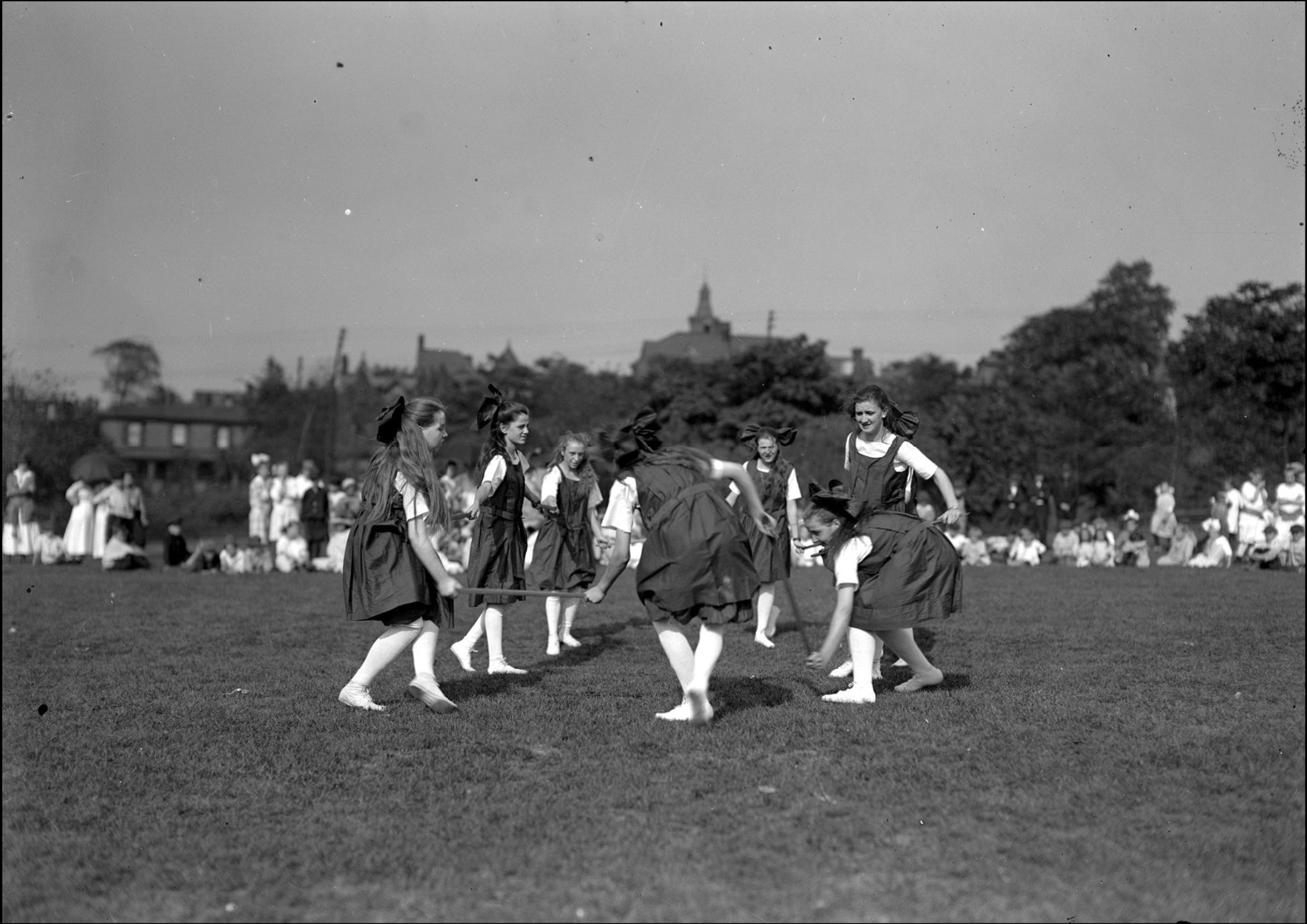
Arsenal Park – Girls Dancing in the Park, photo by Pittsburgh City Photographer
Past to Future – Arsenal Park in Transition
Located in the middle of the neighborhood of Lawrenceville, Arsenal Park has a rich history, an attractive present, and a promising future. Once home to the Allegheny Arsenal from which it gets its name, the park offers its neighborhood paths to walk and run on, green spaces to relax in and escape from the concrete oppression of the city, and many other forms of activity for visitors. However, as visitors walk across the empty reflection pond with the powder house at its side, they may not realize they are on the site of a tragic event which urban planners from Pittsburgh Parks Conservancy are trying to now memorialize. The space of Arsenal Park has undergone a transition before from arsenal to park, and for its next transition urban planners are attempting to combine the historical and current aspects of the space into an innovative park that Lawrenceville community will enjoy for generations to come.
The Past
The story of the space of Arsenal Park begins with the start of the construction of the Allegheny Arsenal in 1814. The United States was about halfway through fighting the War of 1812 with the British Empire and needed a site to create munitions for its soldiers and sailors fighting on the Great Lakes. However, the arsenal was completed in 1829. The area of the arsenal covered much of what is modern Lawrenceville today, as there was space for horses, blacksmiths, barracks for the soldiers, and in the space of the current park there was the munition laboratory and the powder magazine. The city of Lawrenceville – it did not become a Pittsburgh neighborhood until 1868 – was developed alongside the arsenal at the same time (Stewart 6).
On September 17, 1862, the same day as the deadliest battle of the American Civil War – the Battle of Antietam – the Allegheny Arsenal experienced the largest civilian disaster of the war, in which 78 workers died in an explosion. The weeks leading up to the explosion had been especially dry, which meant that when iron horseshoes, or iron wheel casings, and cobblestones met, sparks were more likely to fly. On the tragic day, the horse, part of a team delivering gunpowder, kicked up a spark that led to a chain reaction of explosions which resulted in the death of the workers. Most of the workers were teenaged girls from the Lawrenceville community. However, due to the ongoing war effort, the arsenal was quickly rebuilt and work continued within weeks (Connors). The arsenal continued to be used after the end of the war, as it helped the United States during the Mexican-American War, and was decommissioned in 1906 (Pitz).
The end of the Allegheny Arsenal marked the beginning of the first transition of the space. The space’s first use after being an arsenal was as a storage space, but it soon fell into disuse. Fortunately, a prominent US Congressman from Lawrenceville, James Burke, convinced the federal government to lease the space over to the city in order to create a park. On July 4, 1907, the park was opened to public, shifting the space from a walled and guarded military area, into a space the public could enjoy for leisure instead of sending their children to work. However, the new park was not completely detached from its time as a military installation at the time of this 1907 transition. The powder magazine and the old walls remained, and there were plans to build a Marine hospital on the site (Pittsburghparks.org). Still, this was a more community friendly version of the space than an arsenal.
Moving to the Present
Slowly following the opening of the park, the military remnants of the park began to be replaced by more park-like features. The powder magazine was repurposed into a tool shed, and a reflection pond was put in to memorialize the workers who had lost their lives in the explosion. President Taft said of the use of the space, in statement during the dedication of the pond, “I think it is safe to promise that the Secretary of War, whoever he may be at that time, will see that it is not kept from the children one instant longer than is necessary” (Pittsburghparks.org).
Photographs since then have shown that President Taft and the federal government have kept that promise to Arsenal Park. Documents in the historicpittsburgh.org archives show children putting on performances in the park (image 1 in gallery), and people playing baseball. Other historical documents show plays being performed in shadow of the powder magazine, a junior play set, and shaded walks.
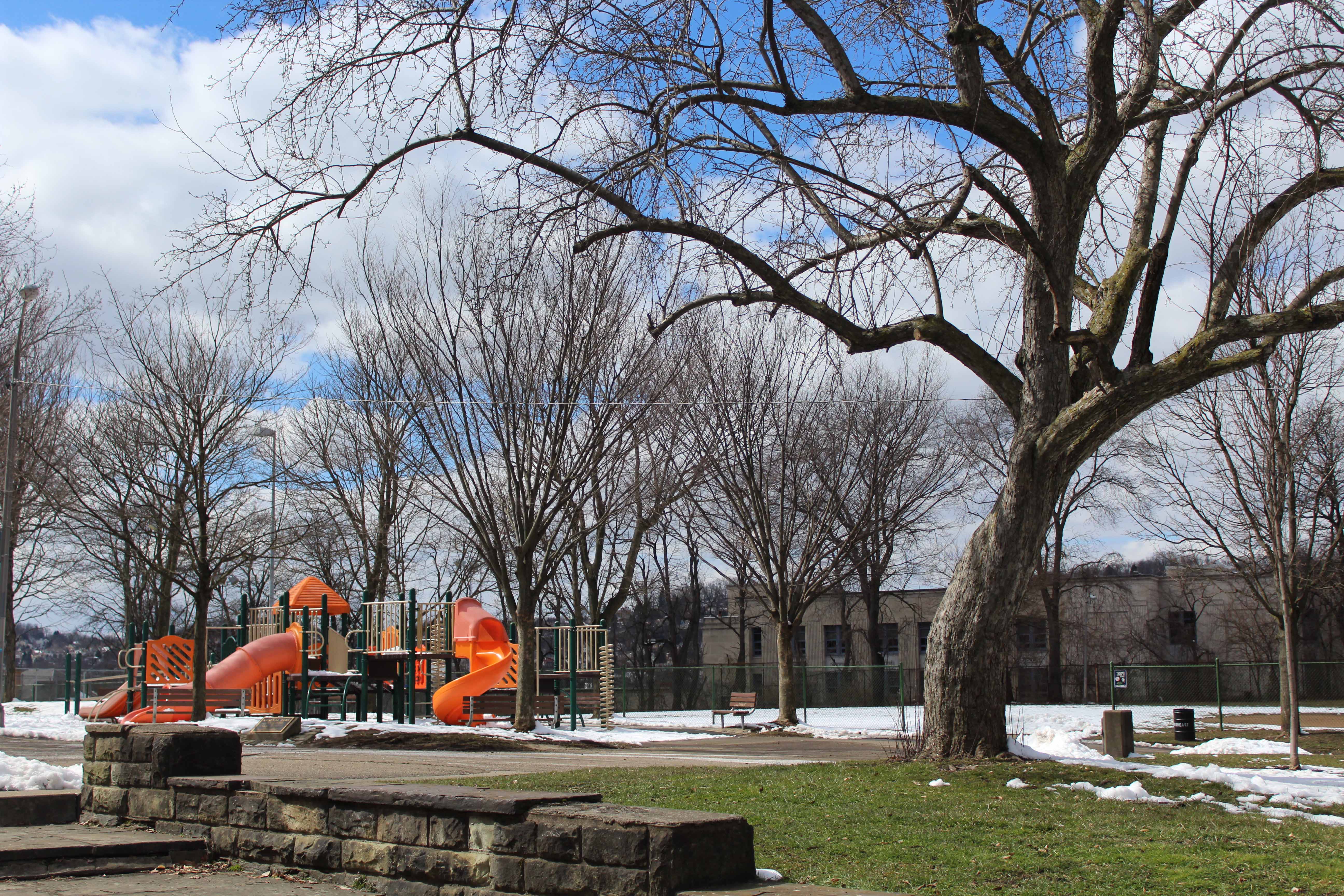
Arsenal Park has kept its original shape up until this day since 1934, when it underwent a series of redevelopments that lasted seven years. While walking through the park, visitors can see the same baseball fields, trees, and paths from the mid-20th century. There is a swing set for the children, a disused cannon, and the powder magazine is still used as a tool shed.
Looking to the Future
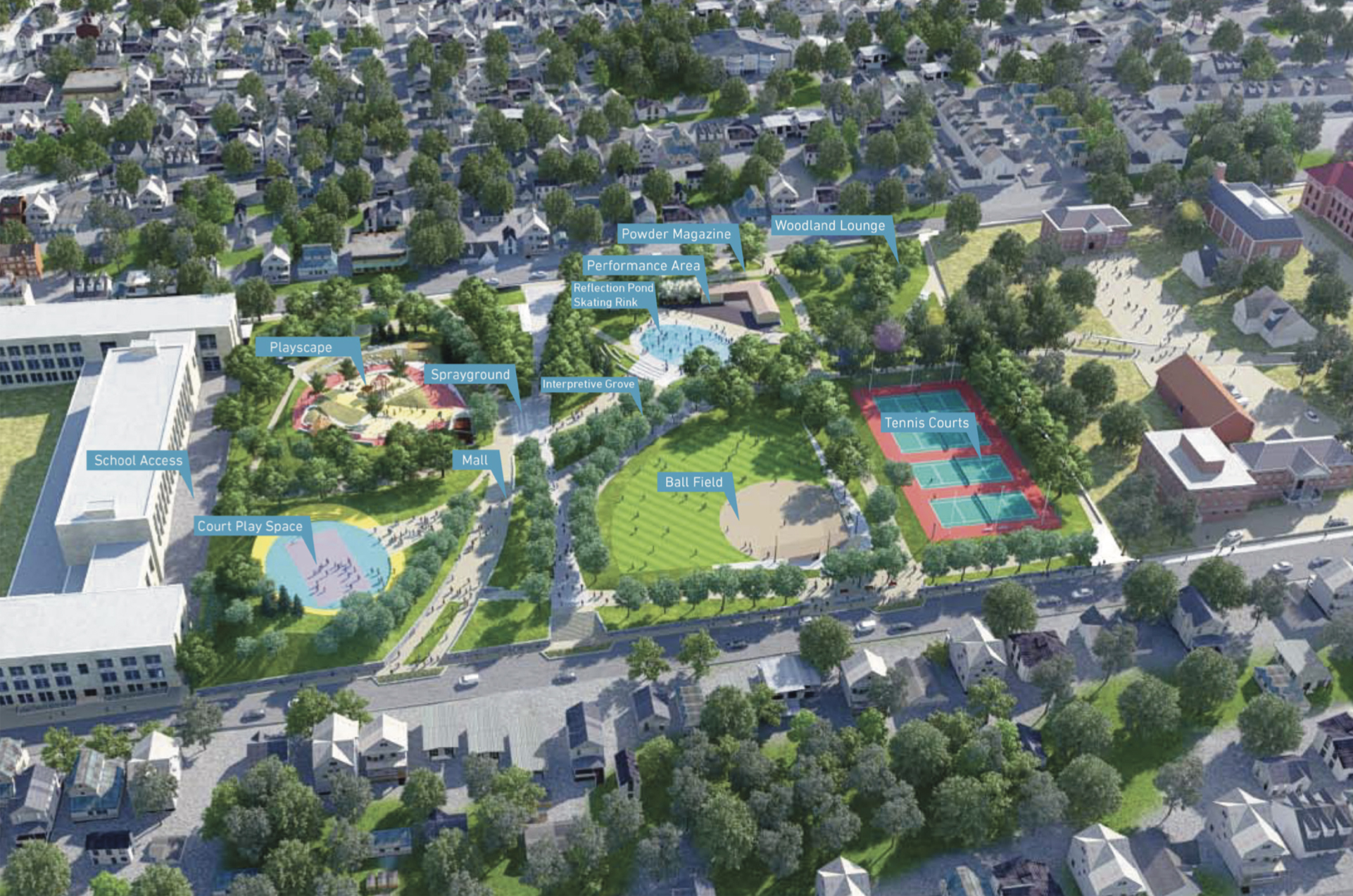
The City of Pittsburgh and the Pittsburgh Parks Conservancy have put forth a new plan for the space. The plan for this new space will completely rework the park. It will create new paths while eliminating old ones, add a new and improved play space for the children of the community to enjoy, put in groves of trees, and make the park more environmentally friendly by constructing rain gardens, as well as perform upkeep the park desperately needs (Pittsburghparks.org).
One of the most interesting parts of the renovation is the addition of a memorial garden. The park currently has little signage and history available to visitors of the park, with just a memorial plaque on the powder magazine serving as the only notice. The memorial garden attempts to better communicate the history of the space to visitors, especially the victims of the explosion, who in a different generation would have been playing in the park (Pittsburghparks.org).
This second major transition will make the park match the community it serves. The park will try to be as kid friendly as possible, as the neighborhood of Lawrenceville has had influx of young families attracted by the low cost of living, and to make the park a destination for children and families who are visiting the nearby children’s hospital. This transition of the park will also take the historical aspect of the Allegheny Arsenal, and the present aspects of the park, to combine them into an historical community space, where visitors can both learn and enjoy the amenities the park offers.
Arsenal park will hopefully be better from this transition into a historical community space, as with this transition Arsenal Park cannot be simply classified as a park anymore. The transition from arsenal to park certainly helped the community of Lawrenceville, as an arsenal is no space for children. Urban planners hope that their renovation of the park will help the community once again.
Works Cited
Pittsburgh City Photographer. Arsenal Park. September 30, 1916, ID#715.16941.CP, Pittsburgh City Photographer Collection, historicpittsburgh.org, http://historicpittsburgh.org/islandora/object/pitt%3A715.16941.CP
“Arsenal Park – Conceptual Master Plan Report.” Pittsburghparks.org, September 2015, https://cdn2.hubspot.net/hubfs/415693/Arsenal%20Park%20Master%20Plan.pdf?t=1520877336599. Accessed 12 March 2018.
Marylynne Pitz. “Allegheny Arsenal Explosion: Pittsburgh’s worst day during the Civil War.” Pittsburgh Post-Gazette, 16 September 2012, http://old.post-gazette.com/pg/12260/1261858-51.stm#ixzz26kXU7l9t. Accessed 12 March 2018.
Michael Connors. “The Next Page: The Allegheny Arsenal explosion — Pittsburgh’s Civil War carnage.” Pittsburgh Post-Gazette, 12 September 2010, http://www.post-gazette.com/neighborhoods-city/2010/09/12/The-Next-Page-The-Allegheny-Arsenal-explosion-Pittsburgh-s-Civil-War-carnage/stories/201009120186. Accessed 12 March 2018.
Stewart, Howard. “Historical data, Pittsburgh public parks: Arsenal Park.” documenting.pitt.edu, University of Pittsburgh, 1943. Web. http://documenting.pitt.edu/islandora/object/pitt%3A00awn7880m. Accessed 11 April 2018