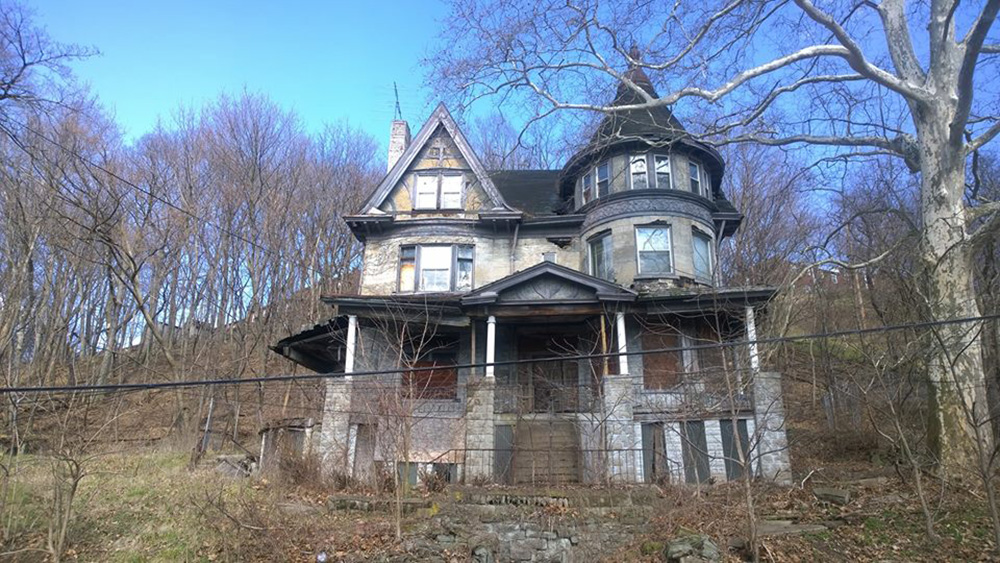
National Negro Opera House. Photo by Kirstyn Gudknecht.
Music in Black Pittsburgh: Reclaiming a Community
The National Negro Opera House stands as a monument to the role of music in the creation of a unified and strong black culture here in Pittsburgh. The opera company was founded by a woman named Mary Cardwell Dawson and performed all over the country as the most well known black opera company in history. Dawson, A graduate of the New England Conservatory, she was unable to integrate into the white opera scene and shifted her efforts to teaching the next generation of black musicians and singers who would one day break these racial barriers. She was a fearless and strong leader in the black musical community, serving as president of the National Organization of Negro Musicians and directing a nationally recognized choir that preformed at the World’s Fair in New York City among other prestigious venues. Her role in the community teaching young people to play classical music laid the groundwork for Pittsburgh to be one of the Jazz capitals in the United States. She provided accessible and affordable classical training to young black musicians who otherwise would not have had access to this elitist genre, and formed a culture in black Pittsburgh centered on opera and classical music. This classical music training created stars like Ahmed Jamal and Napoleon Reed from Dawson’s humble beginnings.
The music scene quickly became the glue that held this community together and empowered them both as individuals and as a cohesive neighborhood. The National Negro Opera Company’s first production, Aida, performed in 1941 at the Syrian Mosque in Oakland, had a storyline relevant to the struggle of the black community. The opera takes place in Egypt where a Nubian princess, Aida, is being held a slave. She and Radamès, an Egyptian military commander, fall in love and he ends up being killed by his own people in order to save her life. The production has strong themes of anti-slavery, humanity and equality, and in its powerful musical numbers feels like a call to action for both the oppressed body and their oppressors. This show went on to be performed in Chicago and New York City and the cultural influence of this type of art and media during the early years of the Civil Rights movement cannot be overlooked. Narratives like this one inspired leaders to take a stand against injustices in their own cities, and Pittsburgh was no exception.
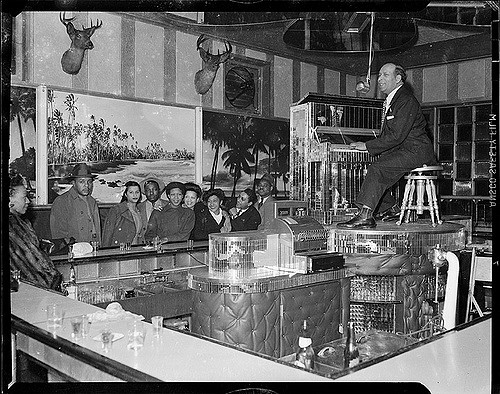
Another way in which music empowered this community was much more literal. Woogie Harris, brother of famous photographer Teenie Harris, was an influential and trusted community leader who earned his living through music venues among other ventures. He was one of runners of the numbers, an informal lottery game popular in Pittsburgh’s black and white communities alike. He also was affiliated with Gus Greenle, the owner of the Homestead Greys negro league team based in Pittsburgh’s East End. Having earned his money though music and then pouring it back into building up pastimes to encourage community engagement, Woogie Harris truly used music to build his neighborhood up.
Woogie Harris was also the owner of the National Negro Opera House for its years in use by Mary Cardwell Dawson as a music school. Harris rented her the top section of the house, and used the rest to house visiting black musicians from all over the country. At a time when white people began to develop a love for jazz but still wouldn’t dare occupy the same hotels as their black entertainers, the Apple street house was a haven for these talented travelers. Here, they could be treated like the stars they were, walk down a grand staircase, enjoy a nice meal, and mingle with other artists.
When we think about Soja’s theory on Thirdspace, the National Negro Opera House served as much more than the sum of its parts. The house stood proudly on Apple Street as a commemoration to all that had been created by and for black musicians here in Pittsburgh. Inside, it made famous black musicians feel like the royalty they were at a time when they were not treated that way in the white world. And upstairs, young musicians got their classical training from Mary Caldwell Dawson and were empowered through music. The condition the Opera House stand in now is problematic, but offers an opportunity for this rich history to come alive again.
The YPA is leading a fundraising project which aims to restore the National Negro Opera House to its original beauty in the hopes that it will continue to be a place where young people can come to learn and empower each other. At the peak of the Opera House’s use in the 1960’s, the black community in Pittsburgh was self-reliant, vibrant, cohesive, and healthy. Color lines drawn across many aspects of city life have led to a different narrative playing out for these communities today, and that degradation can be seen mirrored in the dilapidated state of the opera house.
The theory of loose parts states that “in any environment, both the degree of inventiveness and creativity, and the possibility of discovery, are directly proportional to the number and kind of variables in it;” this leads to acceptance of the lie that “creativity is for the gifted few: the rest of us are compelled to live in environments constructed by the gifted few.” When we look at a project like the restoration of the Apple street house, there is an incredible opportunity for the community to take part in the recovery of their own history, and the reclamation of the loose parts that make up their neighborhood. Through this approach, neighbors could work together to build a new center for the education of their children and grandchildren, commemorating the rich history of black Pittsburgh through music.
Works Cited
Glasco, Laurence Admiral, and Federal Writers’ Project (Pa.). The WPA History of the Negro in Pittsburgh. Pittsburgh: University of Pittsburgh Press, 2004. Web.
Hamill, Sean. “Two Decades Later, Razing of Syria Mosque Still a Sore Topic.” Pittsburgh Post-Gazette. N.p., n.d. Accessed 10 Mar. 2016.
Jones, Diana Nelson. “Preservationists Hope Plaque Is First Step toward Rebirth of Storied Homewood House.” 2 May 2007. Accessed 16 April. 2016.
Jones, Diana Nelson. “An Irrepressible Voice.” Pittsburgh Post-Gazette. N.p., 1 Aug. 1999. http://old.post-gazette.com/magazine/19990801opera1.asp>. Accessed 4 Mar. 2016.
Paradise, Jack L. “Mosque Editorial Triply Wrong.” Letter to the Editor. The Pittsburgh Post-Gazette. July, 11, 1991.
Ruck, Rob. Sandlot Seasons: Sport in Black Pittsburgh. Illini Books ed. Urbana: University of Illinois Press, 1993. Web.
Soja, Edward. Thirdspace: Journeys to Lost Angeles and Other Real-and-Imagined Places. Cambridge MA: Blackwell Publishing Inc., 1996.
Spears, Charles. “La Julia Rhea Gets Singular Recognition.” Pittsburgh Courier 30 Oct. 1937. Print.
“Syria Mosque.” Pittsburgh Music History. N.p., n.d. https://sites.google.com/site/pittsburghmusichistory/pittsburgh-music-story/venues/syria-mosque>. Accessed 4 Mar. 2016.
The National Negro Opera Company Collection 69.1019 (1993): 36. Special Collections in the Music Division of the Library of Congress. Web.
Trotter, Joe W., and Jared N. Day. Race and Renaissance : African Americans in Pittsburgh since World War II. Pittsburgh, PA, USA: University of Pittsburgh Press, 2010. ProQuest ebrary. Web. 13 March 2016.
Verdi, Giuseppe, and Antonio Ghislanzoni. Aida: An Opera, in Four Acts. New York: C.E. Burden, 1900. Web.